My Greatest Teacher

It’s been going on four years now, Dad. You’d be turning 63 years old in November. Now that I am turning 40 myself, I’m growing wiser (and more disillusioned) with every day. I’ve never been more aware of this stupid human suit I’m wearing. It’s incredible what a difference a few years makes. I wish I could tell you all I’ve learned since you departed. I would ask your forgiveness for the times I articulated your faults on the page, just trying to understand. I would tell you that I understand now. I get it more, Dad.

These are the words rattling around in my mind this afternoon: poverty is a systemic failure, not a personal one. After you died, I discovered that it was a measly ten thousand dollars standing between us and our dreams. I learned that if you hadn’t been literally robbed of your cash, we would have had a home–those sturdy walls and saloon doors we’d sketched out so carefully. Why didn’t you ever tell me that? About the time you got robbed of ten thousand dollars and everything changed?

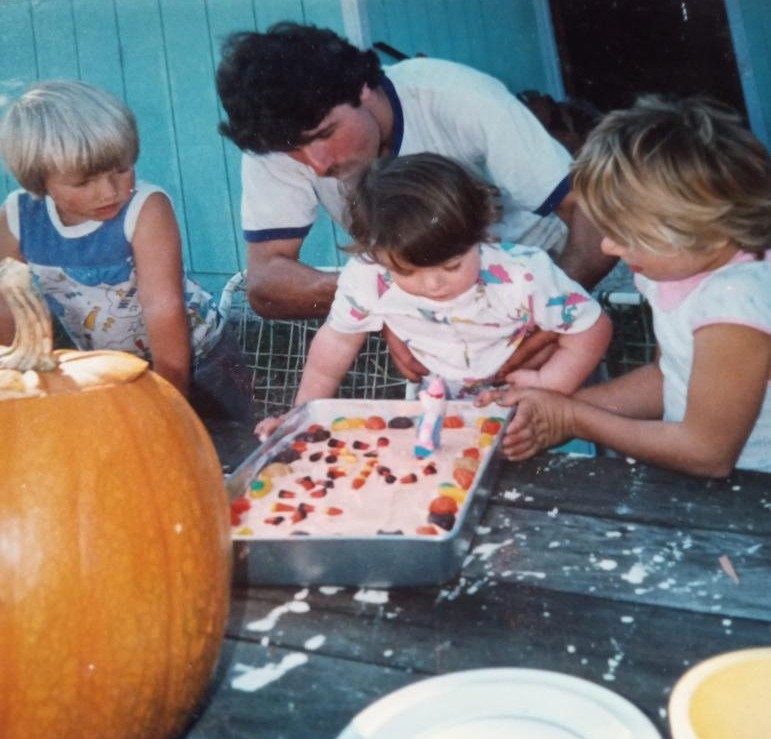
Today, Aunt Julie shared a picture of us that I’d never seen. It was taken on my second birthday, outside the house on Glenn Street. Someone (was it you?) made me a sheet cake and spelled out my name in candy corn. What I love about the picture is that as I am blowing out my birthday candles, so are you. You were ever encouraging, attuned, a gentle wind at my back from day one. God, I look like Autumn in the photo. A few years ago, unwittingly, I also decorated her birthday cake with candy corn. October babies.

You don’t want to be forgotten, do you? I know this because every now and again you pop up. A photo I’ve never seen. Your song playing on the radio. Your initials emblazoned on a barn along the interstate. But most incredible are the thirty-some-odd handwritten pages I recently received from a relative, your descriptions of our early days together. How did it take me all this time to realize that it was you all along? That it was you, legally disabled but spiritually sophisticated, who inspired my love of writing? I wish I could tell you all I’ve learned since you’ve departed, because one thing I know for sure is that you’d be listening.

What I wouldn’t give to scramble up a hillside with you today, sit at the top, overlooking some vista, laughing at the absurdity of it all. Someday I’ll get to reading those pages you sent me from the great beyond. But honestly, it kind of hurts to do so. I opened it once and a line jumped out at me. It read, “I believe in simple living and high thinking.” What more do you have to teach me, Dad? Are you still the wind at my back? What can I do to not be robbed of ten thousand dollars? Anything?

Storytime: Reading the Waves by Lidia Yuknavitch

I don’t do book reviews or ratings. If I loved a book, you’ll likely hear about it from me eventually. Rarely, my book hype might even venture into some different form, maybe even a story, which is exactly what happened here.

I was mostly finished reading Lidia Yuknavitch’s Reading the Waves when I spontaneously suggested to my family that we scratch our original Mother’s Day brunch plans in Eugene and drive to Heceta Beach instead. Spontaneity–a mother’s antidote to monotony. The decision was a full body knowing. Something you don’t question. Like when the month before Dad died, I suddenly announced that we’d be making an impromptu trip to see him. Quality time with Autumn’s grandpa. An overdue visit. We didn’t know it yet but—that would be our goodbye. Now I try to always follow my intuition.

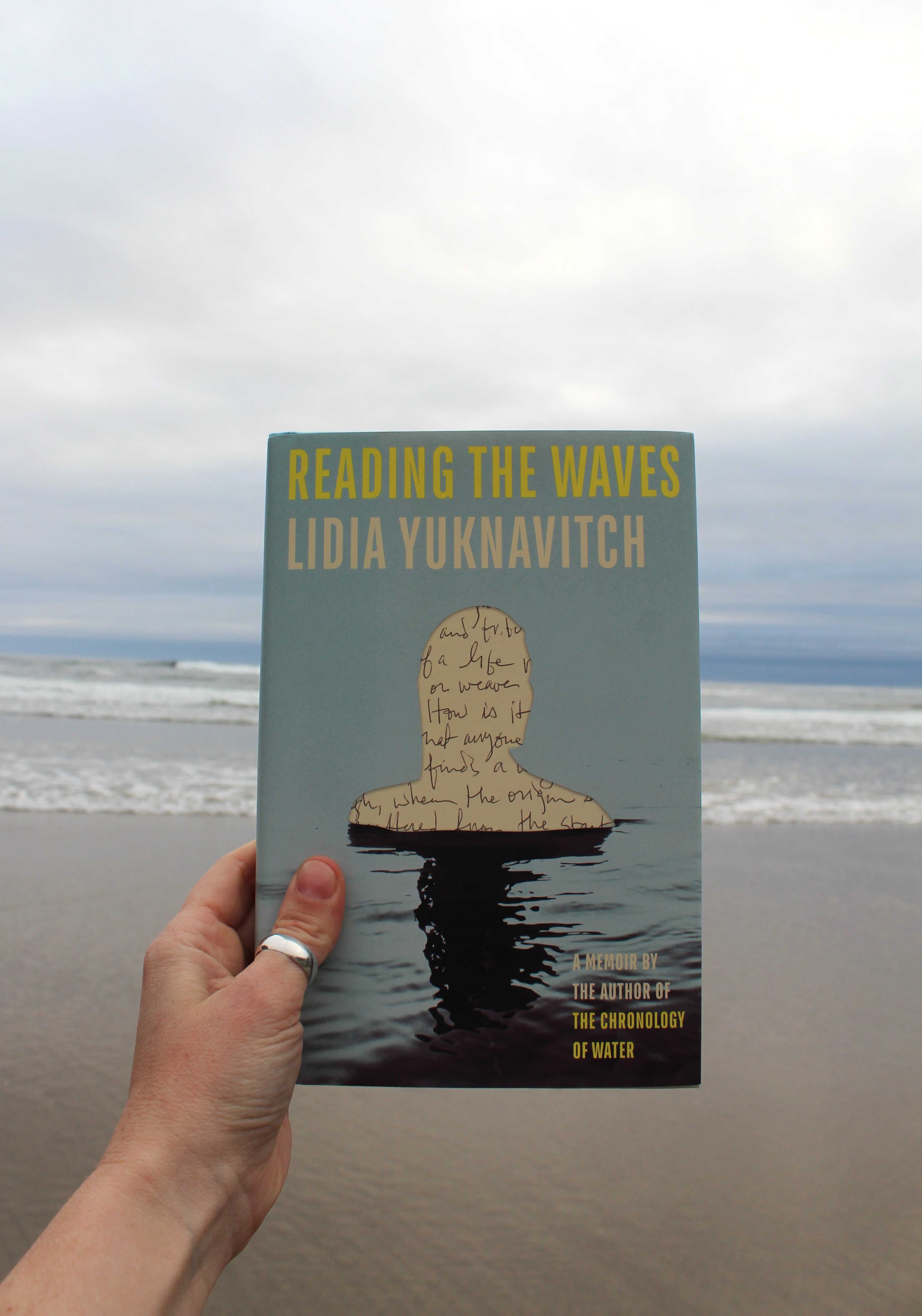
Before driving forty miles northwest to Heceta Beach, I grabbed Lidia’s book, wrapped it in a silk scarf, and placed it in our picnic basket. Once there, Autumn and I began skipping rocks on the creek that spills into the Pacific. The rocks were black, round and flat. They were the perfect skipping rocks! Steve built a campfire in the sand, and we all ran barefoot on the beach. We explored the grottos underneath the lighthouse, examined the tidal pools for starfish, then sat around the fire making s’mores. Eventually I took out Lidia’s beautiful book to photograph it against the moody backdrop of sky, waves and sea. I figured that later, when I’d finished the remaining few pages, I’d have an image to share alongside my words about how much I loved the book. I took a couple photographs then walked back to the campfire.

Back at the farm, a nearly full flower moon in Scorpio shone through the bedroom window. I opened Reading the Waves, reading only for a page or two before the following words jumped out at me: The historic Cape Creek Bridge arches over the place where a creek and the ocean meet. If you are at the lip of the ocean and the arm of the creek, the bridge feels like it has your back.

At the lip of the ocean and the arm of the creek…In her new book, Lidia had written a whole page about the exact place we’d built our campfire and skipped rocks at the beach. The next day, I wrote her a letter and sent it to her PO box. Something about cosmic nudges, kinship, inner knowing, invisible threads, art, motherhood, and awe. Something about Heceta Beach.

Beautiful coincidences aside, first with The Chronology of Water and now with Reading the Waves, Lidia has breathed life into me through her work. It feels as if by writing her truths, she’s writing my truths, too. There are even parallels within parallels, stacked like little nesting dolls: our connection to Eugene, Oregon; our obsession with the underwater world and how it is one of the only places on earth we feel safe; our complicated family stories; our inherited misfittedness; our need for peace, for space, for quiet. But this isn’t about me, it isn’t personal…It’s just that every time I read a book that resonates with me on that level, it feels that way: personal. It makes me wonder if things aren’t connected on a mostly invisible realm existing just beyond our field of vision. Just beyond our willingness to believe in such magic.

The moment I began Reading the Waves, I got swept away. She writes of geographies lodged in our psyches, in our bones, even in our gait. She reminds me that although certain memories may be unforgettable, we can transform the rough ones into something smoother. Like with all the rocks she collects along the shore, stories too are destined to go through their own metamorphosis. Each one with a different history, color, and composite—best witnessed when illuminated underwater. This book feels to me, at least in part, about all the great loves in her life. About the wild forms intimacy takes. They are Lidia’s love stories, right when I needed them most. This book may feel like a return to The Chronology of Water for fans of Lidia’s early work. (Her unforgettable memoir was adapted into a film directed by Kristen Stewart which recently premiered at the Cannes Film Festival.) You can find Lidia’s latest book, Reading the Waves, at Powells Books and other national and local booksellers. She currently teaches writing workshops on the Oregon coast.

Reading the Waves by Lidia Yuknavitch
Heceta Beach, Oregon, May 2025

Journaling Prompts for Trauma Healing

Writing heals. Through the act of writing, we begin to understand ourselves more deeply. This is especially true for writers of memoir, personal essays, and poetry. We discover what matters to us. We learn what’s impacted us, and in what ways. The self-awareness gained through writing becomes a gift to oneself and others. Our journals becoming a place to lay down whatever worries we carry, large or small–with the option of sharing what we’ve written with others, or not. In my experience the act of writing is inherently healing, and the act of sharing our writing is inherently empowering. We discover that people can witness our darkest expressions and still accept us, maybe even love and respect us more knowing what makes us us.

In Spring 2023 I began guiding a weekly journaling workshop “Releasing With Writing” at the Trauma Healing Project in Eugene, Oregon. Since then I’ve witnessed how the process of putting words down on the page, and sharing those words aloud, peels back layers of the heart, generating more compassion for oneself and others. Throughout this journey I have relied primarily on my own creativity generating our journaling prompts (which I am sharing below). Because my own trauma healing was aided by writing memoir, many, though not all, of the writing prompts align with the memoir genre:

Write about your scars
Think about place you’ve lived and describe it in immense detail
Write about an object that holds special meaning for you
Write about a cherished photograph
Write about a time you were bullied/bullied someone else
Write about a time you gave/received love
Write what’s on your heart today
Write about the good old days
Make a list of the turning points in your life
Introduce us to your inner child
A mess you made
A blessing in disguise
A celebration
Survival mode
A reality check
A stranger angel
A beginning/An ending
A trip
Dirt
Fire
Hunger
Companionship
Something you regret
Something you didn’t think you’d survive
A recent adventure
A time you felt filled with hope
A date you’d like to remember/forget
A love letter to the town you live in
Describe a meal that holds special meaning for you
Write about your birthplace
Write about standing in another person’s shoes
Write about a time you were selfless/selfish
Write about a time you had to ask for forgiveness
Write about a time you spread/hid your light
Write about a time you felt free/trapped
Write a love letter to summer
Write a letter to your kid self
Describe your childhood hopes and dreams
Use color as the central point of meaning in your story
Something someone said that you’ll never forget
What’s your inner weather?
What is a big challenge you’re facing right now?
How can you be kinder to yourself this week? This year?
What is a personal belief you held in the past that has since changed?
What do you need more of right now, solitude or companionship?
What is your astrological sign? Do you relate to it? Why or why not?
What is something new you would like to try?
What would you do with unlimited resources?
What’s your superpower?
Where do you go to find yourself?
How do you prioritize self-care?
What do you want more of?
What matters most?
What are you afraid of?
What are you calling in/letting go of?
How do you balance your needs with the needs of others?
How has your definition of love evolved?
What can you let go of today?
What have you learned from your elders?
What advice would you give someone going through a hard time?
Write about a person you are grateful for. What do you admire about them? Why have they had such an impact on your life?
What is broken and needs fixing?
If this time in your life were a chapter, what would it be called and why?
What I remember was…
In this moment I am…

Feel free to use these journaling prompts yourself or in a group setting, and don’t forget to share your prompts with me in the comments section below!

Love and mysterious blessings,

Mama Bird

Dancing With Daisies

“What makes you so special?”

“Nothing and everything all at once.”

Shasta daisies always bring to mind Spring, 1989, and the kindness of strangers. I was four years old at the time, the same age my daughter is now. I was one of a dozen other mini ballerinas parading across the stage at Crescent Elk Auditorium for our annual dance recital. It was the same stage I would awkwardly walk across a decade later during my eighth-grade graduation. Even more awkward having sipped from a small bottle of Peppermint Schnapps beforehand. (I sure was a special student. At-risk, I think they called it.) That was the first and last certificate of anything I would ever get in my hometown.

The day of the recital my four-year-old brain got tripped up after having walked out onto the stage, looked out to the audience, and noticed my Great Grandma Gladys sitting there. I froze. Usually my Great Grandma Gladys was in her manufactured home by the sea. In her dusty pink recliner. With my “Barrel of Monkeys”–a toy she kept just for me–on her TV stand. Usually she was at home, in her nightgown, smelling like Vix VapoRub and beef minestrone. But on the day of my ballet recital, she was right there in the audience, sitting with my Grandma Peggy, Great Aunt Tina and, of course, Dad. I almost couldn’t believe it, until she raised her hand to wave, palm facing me, wiggling four fingers and smiling. I was transfixed. My face turned pinker than our ballet shoes, and I stood firmly in place for the rest of our number, shyly waving back at Great Grandma Gladys while the other ballerinas did their grand plies and jetes all around me. I didn’t even move when the music stopped. Eventually an older ballerina, dressed head-to-toe in black, picked me up and whisked me backstage. I know because we have a video recording of the whole thing.

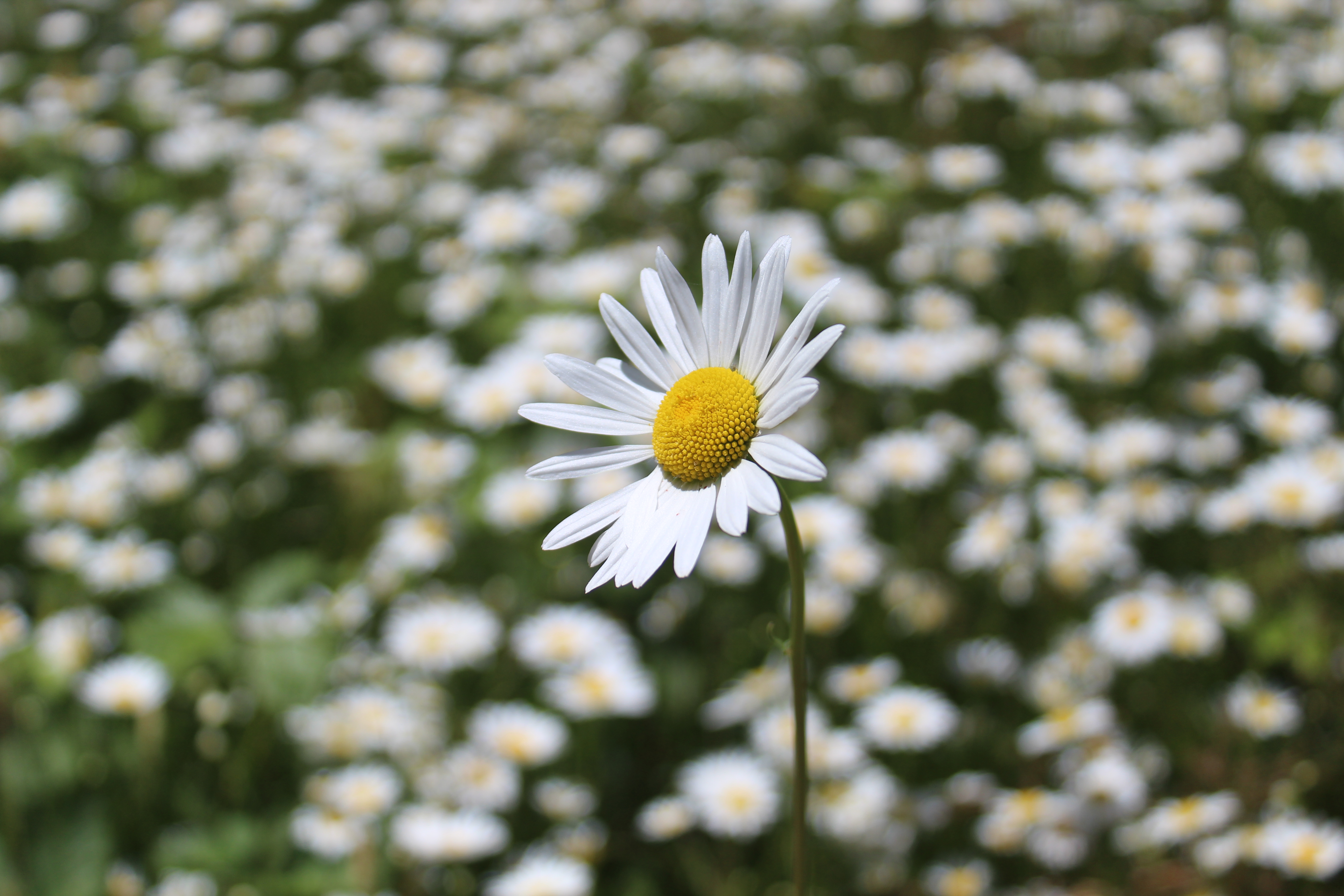
At the end of the recital (this is where the Shasta daisies come in) all the ballerinas from the entire recital went out on stage to take our final bow. The leads got big flower bouquets and rounds of enthusiastic applause. The younger mini ballerinas all got single red roses. And then there was me, the last mini ballerina and no more red roses to go around. Surely it was because I’d goofed up on my part, not even dancing like we’d been practicing for. But before anyone could boo or throw something or–even worse–collect their jackets and leave, a nameless, faceless stranger handed me a single white Shasta daisy on a sturdy green stem. They must have run outside and picked it.

The Shasta daisy set me apart, just as I had set myself apart earlier, as a stage frightened little girl. Not all of us are meant for the spotlight, or even for destined for the things that everyday people take for granted–a mother to look after you, graduations, trophies and certificates, a bedroom to yourself, red roses…That day in the auditorium was the first of many more humbling moments to come. But looking back, it reminds me that no matter how difficult the circumstances are, there is always an angel in the wings. The Shasta daisy is a reminder that I am both special and not special all at once.

Dad and I after my ballet recital. A single Shasta daisy in my hand. Spring, 1989.

Laughing

You’re no fun,
they told me

I couldn’t help but picture
myself hanging upside down
on a tree branch

laughing

marching
up the hillside
in search of wildflowers
and fungi singing one of my
favorite songs

Dear Prudence

You’re no fun,
they told me

I couldn’t help but picture
Dad’s obituary, which I wrote
a few short months ago,
and likened
him to Christ
and got his age wrong

(I wrote sixty, but Dad
was only fifty-nine)

He never got a Senior Discount
…he would have loved that

You’re no fun,
they told me

I couldn’t help but picture
Dad howling under the fullmoon
just because
or steering our kayak through the
whitewater, kid me in the front,
or us meditating together at sunset
just thankful for the grace of another day

You’re no fun,
they told me

And I laughed

All The Tattoos I Never Got

Tattoos are expensive. But not the first tattoo I never got. The first tattoo I never got was going to be free, because my friend who was fourteen, had an older brother who was sixteen, and he was doling them out for free. He may or may not have been on something. But the real reason I didn’t get the first tattoo I never got–a flaming heart on the inside of my right hip bone–was because I knew Dad would kill me. Or that he’d want to. Or, at least, he’d say he wanted to. “I could kill you,” I could picture him saying, fists clenched like he wanted to fight, but without a fighting bone in him. All soft on the inside like the bubblegum ice cream he bought me down at CC’s Diner.

Plus I didn’t think my friend’s brother could do color, and I didn’t want a green flaming heart, I wanted a cherry red one with licks of yellow and orange flame coming off of it, like was on the sides of the hot rods down at the annual Sea Cruise.

The second tattoo I never got wasn’t quite as symbolic as my “love equals pain” flaming heart. Like my friend Aimee had done, I was considering a full back tattoo–a landscape. The landscape of home. A redwood tree, and the ocean, and maybe some rhododendron. The plan only got as far as that–a fantasy–before cost prevented me from even considering it. Months later, at 23-years-old, I moved from the high desert where I was living in Arizona, back to the Pacific Northwest. Back to the big trees and the sea. It hadn’t been about having a tattoo at all, but about answering a calling.

The third tattoo I actually got close to getting. It was on a whim which, I was sensing, had to account for at least half of all tattoos out there. It wasn’t even during a break up, or anything. I can’t even put my finger on why I was going to finally get the tattoo I never got. Something about being hip, or the potentiality of appearing as hip as I felt.

I almost went through with it. I thought about it for several days before walking into Cry Baby Tattoos in Eugene. I presented the tattoo artist with an image from my phone: two minimalist looking tattoos, a sun and a moon. Stick drawings for the backs of my arms, placed above my elbows. The sun on my left arm, the moon on my right. I kept thinking of a favorite quote, “Three things cannot be long hidden: the sun, the moon, and the truth.”

The tattoos would be a reminder to always be truthful, to seek truth in all situations. To demand truth. To be truth.

As soon as the tattoo artist stenciled the designs on my arms, a perfect replication, I looked into the mirror and suddenly my elbow wrinkles jumped out at me. I hadn’t noticed them before. And when I bent my arm at the elbow, the sun and moon stretched, misshapen.

When I confessed to the tattoo artist that I felt conflicted, and didn’t think I could go through with it, he responded gracefully, “It’s your body.”

The next tattoo I never got were the coordinates of home:

41.7353923 N -123.9828519 W

It was either that or a fiddlehead fern on the inside of my left wrist, to remember Dad by. Later, I learned that I didn’t need the coordinates of home tattooed on myself anymore. Because now that place would forever be a part of me. I could plant trees in Dad’s yard instead, and spend decades watching them grow. It seemed I had outgrown all of the tattoos I never got, which lead me to thinking that from here on out, maybe I should just let my scars do all the talking.

How to Grieve a Father (Before He’s Even Gone)

After getting the news…

Go stand in the shower to cry, howl instead.

Wail to the heavens, his heavens, the heavens that he believes in enough for the both of you.

Squint your eyes at the crescent moon, the last moon Dad would ever know. Grapple with that for a minute.

Later, meticulously make note of the moon and its aspects: a waxing crescent moon in Gemini.

…Search for meaning. Always search for meaning.

Wonder aloud, tell him, “You were everything to me, Dad. And now you are everything.”

Light a candle, and then another candle, and then another candle. Burn sage and cedar wrapped in string. Sing the Maha Mantra over his dead/dying body. More wailing.

Then silence. Enough silence that someone says, “I think she’s in shock.”

Hold your hands in prayer. Pray for grace, pray for strength, but most of all, pray for his soul to be okay after falling off that ladder.

Notice his body swelling. His hands. His eyes. Listen when the doctors tell you it’s the machines that are keeping his body alive. Write all the dirty details in a notebook, as if that’s going to change anything. Prognosis: impossible.

Instruct them to keep keeping his body alive until all or most of his loved ones have come to see him, to say their goodbyes and their thank you’s.

Host them. Meet them in the waiting room. There are so many and they can only go in in twos.

Notice how his body is swelling. How at first he looked just like Dad, but now, not so much. Notice how he doesn’t open his eyes. Notice the artificial breath. Touch his hair.

Put your hands in prayer again.

Talk like Dad is in the room. Tell him, “So and so is here to see you, Dad.”

Surprise yourself by reciting the Lord’s Prayer verbatim during a too long silence.

After all the visitors, try to sleep next to Dad in a recliner that the hospital provided. Have trouble sleeping. Decline the offer for TV. Walk the halls of the hospital instead.

In the morning, instruct the doctor to unplug him. Play a favorite song. More wailing.

Let your grandpa hold you…something he’s never done before.

Weeks later, let your grandpa walk you down the isle at your wedding.

Ask the mortician to burn him with his tulsi mala beads on, wrapped around his wrist or placed around his neck.

Liken him to Christ in his obituary.

Don’t wash Dad’s laundry, because that means he’ll really be gone.

Place a portrait of him as a baby at your dining room table. His cherub-like smile greeting you every morning.

Place his adult portrait on your dresser, making eye contact every time you pass it.

Decide you don’t need Dad in your bedroom, on your dresser, looking over you. Place the portrait in the common room instead–a reminder to all who enter, “Father Gone But Not Forgotten.”

Search for rainbows. Stitch a quilt of silver linings.

Study Dad’s birth and death dates for meaning: 11/11/62 – 5/5/22

Find none because your mind is too blurry.

Place the jelly in the cupboard and the peanut butter in the fridge.

Finally wash Dad’s laundry, twice to get rid of the ICU smell. But refuse to put the clothes away. Then it’ll really, really mean that Dad’s gone.

Gone. Meditate on the origin of the word. It’s from the Old English “gan” meaning to depart or go away.

Dearly departed. Indeed.

Take a month to go pick up the cremains, which they present to you in a box inside a gift bag.

Tell yourself you’re going to buy little ceramic jars for the family. Then don’t.

Smoke too much pot. It was your and Dad’s “thing.” That and swimming or soaking.

Tell yourself you’re going to take yourself to the water every opportunity you get. Then don’t.

Tell yourself you’re going to send a card to the nurse staff at Sutter Coast Hospital. Then don’t.

Tell yourself you’re going to try not to be so hard on yourself for once. Then don’t.

Have breakfast with his baby picture everyday. Granola and that gummy smile.

Tap into that grief place through music. Play all the emotional ones. Unknown Legend. Eureka. Ripple.

Take a walk in the woods, it’s what he would have wanted.

My Sweet Lord

I am not a destiny person. Or I wasn’t until now anyway. I’m still wary of signing off on that whole concept. But I dare you not to think of God or the afterlife, when staring at a body you once knew, loved, even relied on, hooked up to a life support machine. Questions of what the soul is, where the soul is, and where that soul will end up are likely to swirl around in your consciousness for weeks, if not forever, if you are like me.

So that is where I am now. As I write this, it is seven days after Dad’s passing. I am reflecting on how in those moments of great challenge with Dad, in those hours that I laid by his bedside in the hospital, I surprised myself by curling up in the presence of Something Greater. It didn’t feel good to pray and to surrender—nothing felt good at that time—but it felt completely necessary. The experience with Dad made me question my own faith, or what little there was left of it. This is all to say, you don’t need spirituality…until you do. And you will.

I usually cringe at statements like “It was meant to happen” or “It was all part of God’s plan.” Now there is a small fissure in the wall of my beliefs, where the narrowest slip of light can come in. I didn’t become a believer overnight. Or rather over those 36 hours between Dad’s accident (a fall from a ladder) and when we took him off life support. But my defenses did soften. Where else was there to turn, but to some idea of God? To some idea of an afterlife? I couldn’t just turn on the television and forget about it all, though they did, perplexingly, have a TV in the ICU.

How could all of this, I questioned, from work to play and everything else in-between be orchestrated? It had all been said by others before but, if it were all orchestrated, why would innocent people be imprisoned and tortured, people who love with all they have become broken hearted, and children be born, and die, on the streets? Why is there no justice on this earth?

If there was such a thing as heaven, I hoped there was justice there. The truth is, there is no conflict in heaven. So there needs to be no justice.

According to many, the answer to why there is so much pain and there is so much suffering is that the soul has a need for spiritual evolution. That each has their own lessons to learn in this life, on this earth. Without conflict, our spiritual selves cannot grow or evolve. In the days after Dad’s passing, people started saying things like, “His work here was done.”

Dad used to talk a lot about religion and spirituality. And now that he’s not physically here, I feel I owe him the respect of listening, of leaning into his beliefs, of opening my heart and mind to what he’d been saying all along. His teachings have never been more relevant. In the moments by his bedside, I experienced more than one “ah ha.”

The best I can do for Dad now is to breathe more life into those wisdoms and teachings that he’d had. In his obit, which I wrote, I liken him to Christ. It’s a bold statement, I know. But some people don’t realize the well of compassion that Dad carried within him. Just one example, at the time of his death there was, and still is, a man living on Dad’s property. When we approached him and asked where they’d met, the man said he met Dad at the Mission. He’d just been released from prison, and Dad offered him a place to stay. As a child, there was always one person, usually a convicted felon, living on our land. These are people who had been shunned from society, with no place else on earth to go. And Dad was there for them, as hard as that was for me at times.

“Whoever oppresses a poor man insults his Maker, but he who is generous to the needy honors him.” Proverbs 14:31

I didn’t know that scripture, I don’t know any scriptures, really, but thinking about Dad’s ways, I did a quick Google search. It turns out there are a shit ton of scriptures just like that one.

When the doctor came into the room—Dr. Christie—he asked me, with complete respect, why I had laid a hindi blanket across Dad’s body. I fingered the white cloth with the red Sanskrit lettering and depictions of Krishna and Rhada.

“Dad is a Hare Krishna…and a Christian, and a Buddhist,” I told Dr. Christie.  

He took a sidelong glance at the Bible I’d brought and placed on the table next to Dad’s breathing machine. He worshipped any God that was in front of him, I thought. But I can’t remember if I told Dr. Christie that or not.

A few days later, I was reading a book “Embraced by the Light” by Betty J. Eadie and came across this:

“I wanted to know why there were so many churches in the world. Why didn’t God give us one church, one religion? The answer came to me with the purest of understanding. Each of us is at a different level of spiritual development and understanding. Each person is prepared for a different level of spiritual knowledge. All religions on earth are necessary because there are people who need what they teach.”

It turns out that that book “Embraced by the Light” would help me access my spirituality through a side door: near death experiences or NDEs. I couldn’t come to that spiritual place head on, through the Bible or the Baghavad-Gita. I don’t jive, and never have, with religious stories that read like fiction or with timelines that seem to counter science.

But I could get behind near death experiences themselves, I mean, Dad and I had both had one. His, we all believe, was what made him the way he was. But more on that later. I couldn’t possibly tell this entire story in one sitting. In my journal, where I have been laying down all the letters and words that have been helping me come to some place of understanding at this unimaginable crossroad in my life, my writing now shifts from addressing you, the audience, to addressing Dad himself. This change in style makes it difficult for me to continue the story and round it out in a nice, easy way, so I will share the next segment of what I have written in my journal, before closing this chapter and picking the story up in a different piece. If anything is to render me speechless, or wordless, it is Dad’s passing. So be it. The fact that I cannot finish this essay is a testament to my grief.

My next paragraph is, “I thought of how, since you were a boy, you’d had one foot in this world and one foot in another. You didn’t remember ‘what happened’ when you were in a month-long coma, or what happened to your soul in those moments that you floated lifeless on top of the water, having drowned, but it was clear that you’d met God.”

This is all to say that you don’t need spirituality…until you do. And you will. And also this: some things you just can’t write, or reason, your way out of.

Love and mysterious blessings,

Mama Bird

The Importance of Showing Mercy in Memoir

Like all of us, I’ve always been of the belief that actions speak louder than words. But over the past several months, I’ve been thinking about how loud words do speak, particularly if you are a memoirist.

I’ve had many years of writing and publishing (mostly here on my blog) to teach me that those who are written about will read your words closely and they will take them to heart, naturally. I have also had the luxury–I humbly admit–of those characters showing me extreme grace and forgiveness.

My memoir writing journey began in my very early twenties, and because I knew virtually nothing about memoir, other than having read a couple of them, I approached my writing this way: I wrote everything about everyone and used all their real names.

Now, I look at my pages and I see the truth, yes. But I also look at those pages and see real live people with real live emotions, and I have to honor that. At this juncture, having written the meat of the story, and revised it several times over, I have a choice: Do I change names or soften the story? Do I painstakingly sort through and assign similar sounding names to key characters? Cousins, boyfriends and bosses? Or do I keep their names and speak as if they are there in the room with me: with honesty, integrity, and compassion?

Writers in the genre have all heard the same line, “If they didn’t want to be written about poorly, they shouldn’t have behaved badly.”

It’s a fine starting point, a line to help you get your pen moving across the page. But I am curious to hear from other aspiring memoirists if it’s that same sentiment they think of when crossing over the threshold into querying and publishing.

Because, after all, most books do not become overnight bestsellers. What if we memoirists, in the end, sell our books only to our family members. If your book subject matter, childhood trauma, wouldn’t make for some awkward Thanksgiving dinner conversation, well I don’t know what would.

But here’s the thing, when it comes to me, the majority of those who have purchased the books I have self-published are not my family. I haven’t had a Thanksgiving with my mother, ever, and abandonment, whether comfortable or not, is central to my story. I cannot untangle myself from the truths and tell some other story. But maybe I can tell my story with a balance of both transparency and grace. Maybe. That’s what I hope for.

Back when I first started writing The Poetry of Place, long before it had a title, long before I’d changed my mother’s name to Moonbeam, and long before I started dragging my pages through critique group, it was all about the therapeutic benefits of memoir. I didn’t think of it in those terms back then, but looking back I’d really, really, really needed to exorcise my story. I was always a writer, from elementary school on up. So my story–once I finally realized it’s potential–became viable subject matter. And my intention morphed from the therapeutic benefits of writing to the creative challenge it presented: Writing a book worth reading.

So rather than “If they didn’t want to be written about poorly, they shouldn’t have behaved badly,” how about, “Hurt people hurt people.”

Most people agree with that statement, and I believe the message is being conveyed through my memoir. Therefor I cannot take responsibility, or blame, when expressing, in so many words, something that we all agree is true, that “hurt people hurt people.”

But that’s what it all comes down to, responsibly. Because memoirists aren’t just airing our dirty secrets, but in some cases the secrets of others, too. In turn we have the potential to create a significant portion of someone’s legacy. And that is a responsibility that should not be taken lightly. Ever.

As I cross over the threshold into querying (that’s the long process of landing an agent or a book deal), and as I refine its final pages, imagining its bound version, I weigh my options. I am trying to strike a balance that honors both what I’ve endured, and protects the inherent innocence of those surrounding the story itself. Because none of us are perfect. Not even close. I think the most helpful advice I have heard is to be as hard on myself in the story as I am being on others. I assure you, given my nature, that my flaws will come across strongly in the final story. No matter what version you get.

Love (above all else),

Mama Bird

This is How I Care for Myself

Only build what you can properly care for.

This is how I care for myself:

Some people listen to their bodies, I listen to my heart. Of course, it’s louder when it’s pumping full of blood, so I take big, long strides up and down the hillsides near our home. When the sun comes up in the morning, I raise the blinds in both bedrooms and make two beds before making the coffee. I work for that cup, I earn it.

This is how I care for myself:

If I have time, I sip my coffee seated by the window. I especially love the blue sky. I didn’t appreciate it as much pre-pandemic, but now, after everything, I value the blue sky much more. If I don’t have time, the coffee goes into a dented aluminum mug, long on function, but short on looks.

This is how I care for myself:

I paint my toenails a sunny yellow. I paint them myself because it’s more satisfying that way. I offer to paint other people’s toenails too, because I secretly like to do that. I love imagining the joy on their faces when they look down at their toes.

This is how I care for myself:

I write in my journal and I don’t care about the scribbles and trailing thoughts because I remember a time when it was all about the journey and not the product. It really can’t be any other way and still be true.

This is how I care for myself:

I register for a grief writing group because feeling and writing is what I do. And feeling is better than numbing. I do it to help with the anticipatory grief I am experiencing over my grandmother’s health. “It’s an investment,” I remind myself.

This is how I care for myself:

I sing and dance with the children, even when I really don’t want to (even when I’d rather be writing).

This is how I care for myself:

I only take what I have it in me to give in return.

This is how I care for myself:

I take social media fasts on the weekends. It doesn’t transform my life, but it helps me stay accountable to the things, and importantly the people, that really matter to me.

This is how I care for myself:

I put invisible, impenetrable walls up around me–porous for only a few.

This is how I care for myself:

I knock them down from time to time. I rock n’ roll.

This is how I care for myself:

I learn, slowly, what boundaries are. I communicate my needs, first to myself and then to others.

This is how I care for myself:

I get my hair trimmed regularly. I don’t need a cut, exactly. I just like feeling cared for. I wear a big, soft shawl the color of wine.

This is how I care for myself:

I accept whatever weird and wacky–or totally mundane–way I have of taking care of myself. I trust myself–now, finally–to care for myself in healthy ways, the best ways for me. I do these things regardless of what others think of it.

This is how I care for myself:

Some people listen to their bodies, I listen to my heart. Of course it’s louder when it’s pumping so I take big, long strides up and down the hillsides.