Sunday
It was September 6, 2020. The sun appeared like an eraser tip in the sky – gray, muted and small. Usually in September the sun was a bright yellow beach ball shining down over our homestead halfway between Eugene and the Oregon coast. There were high winds. We never got high winds. Smoke appeared to be coming over the mountainside and our sheep were hunkered down in a huge heap out in the pasture. Within days, record wildfires would burn more acres of national forest land than had been burned in all the previous 36 years combined. They’d even give it a special name, the 2020 Labor Day Fires. But we didn’t know any of that yet.
When the smoke settled in and the electricity companies turned off the power, I closed and locked every single window and door in our manufactured home. I didn’t know if locking the windows made a difference, but our home wasn’t that airtight. It was something we struggled with in the winter. If we didn’t have a fire going in the woodstove, we woke up to temperatures near what it was outside.
Wildfires were burning on the other side of the valley. Flames licked up and down the McKenzie River corridor, people’s lives were in danger and farm animals were being transported to the fairgrounds.
“Why, mama?” Our child, who was barely verbal, asked me of the locked windows and doors. She wanted to run and play outside, like she had done during other moments of daylight in the summertime.
“Smoke,” was all I could respond.
Reading the news headlines was making me anxious, but I kept scrolling anyway.
“The Oregon Health Authority warned Saturday that wildfire smoke can exacerbate respiratory diseases, including Covid-19.” September 6, 2020 OPB.org
I retrieved two kerosene lanterns, wicks, and oil that I kept stashed for when the power went out, then set out to make a dinner of lemon and chicken on top of our woodstove. Years ago, a friend of ours had jokingly said that we were the couple he’d want to pair up with in an apocalypse. It was a nice thought, and far from the truth. How many millennials would actually fare well in a real, live apocalypse? That was the word that kept coming up, apocalypse.
On top of feeding, entertaining, and caring for our toddler, I was wondering how I would accomplish a Zoom conference the next day, type and submit an article for the paper, and how the helk we were going to care for all the farm animals given the current conditions.
If the smoke persisted, what would happen to the hundreds of chickens in our care? I stared out the window and feared the worst. I’d been working on a pastured poultry farm two summers prior and we’d suffered a few fatalities during a particularly smoky season. The smoke we were experiencing was already preceding that summer. The sky had been a strange shade of sepia for more than twenty-four hours. It was as if we were all stuck in a vintage photograph. But no one was using words like unprecedented or hazardous to describe the smoke just yet…that would come later.
In the morning, when the water ran out completely, I opened the cupboard where we kept roughly 10 gallons of emergency water in plastic jugs. My soon-to-be husband was working at another farm, his day job at that time, and Autumn was still asleep, so I carried three jugs of water out to our farm animals. Because there was no electricity, there was no pumping water into the water lines.
I watered the flock of sheep and quickly fixed up our chicken brooder, placing blankets over the top to replace their heat lamps. It was probably eighty degrees out, but little chicks need it to be closer to 95 degrees. I was relieved to see that the baby chicks still had one full waterer. I felt like crumbling under the stress, but instead I stepped outside the brooder and took a deep breath, with my hands cupped over my mouth to avoid the smoke.
I craned my neck looking at all the Douglas fir trees surrounding our property. They were towering over me. Dense forest everywhere. Suddenly, it was as if we were living in a matchbox, and all it would take was one spark. I’d lived in the forest for most of my life, but up until then I’d never feared it.
When my fiancé came home from work I was on edge, despite all the deep breathing. He gave me a quick, dry peck on the lips. We were running out of water from our “apocalypse” stash, I told him. He said he didn’t think watering the farm animals with water from our home stash had been such a good idea.
“You take care of the farm, and I’ll take care of Autumn,” I told him through gritted teeth.
Monday
On Monday, Labor Day, I’d been scheduled to pick up twenty 50lb bags of chicken feed from a mill fifty miles north of us, but on route in our minivan with Autumn in tow, the smoke, high winds and impending fires had me feeling unsafe. I explained all of that to the mill’s owner over the phone when I turned around halfway. It was clear he was less than impressed that I’d been unable to follow through. Tensions were high. What kind of farm wife was I?
After returning from work, my fiancé promptly left to purchase a generator. He was also going to pick up the chicken feed: my failed mission. He didn’t mention the massive water shortage issue. I knew he was dealing the best he could. It wasn’t his fault he’d been asked to pick vegetables all day in the smoke. He had a job to do. More than one. Same as me.
I paced around the house, looking out all the windows into the sepia haze. It was day two of no power, no water, and lots and lots of smoke. The sheep were grazing out in the pasture, though they didn’t appear to be eating. I felt horrible for them.
The week before, my biggest concern was catching the Coronavirus. This week I was mentally packing our go-bag. I wondered what other families were doing right then: fashioning air filters out of box fans, purchasing brand-new air filtration systems, watering their lawns and roofs. I felt like a sitting duck and I didn’t like the feeling. I was resentful that farming was demanding so much of my fiancé’s energy and time. I had Autumn to care for…and my own work deadlines to meet!
Thick, mucusy smoke was seeping in through the floorboards and flimsy doors. Our shared objective became to open and close the door as quickly as possible. There was our border collie, Cedar, who was coping with all of this as well.
I ran into our neighbor, an avid outdoorsman, out near the water pump. “I’ve been preparing for this my whole life,” he said to me, cloaked in camo. It was true, he had a generator, and other fancy, survivalist-things. He pulled 5-gallon water containers out of the back of his full-sized truck while his four-year-old ran circles in the thick smoke.
I kept mentally packing my go-bag. Although our neighbor offered me one of his 5-gallon water jugs, my pride, or something, wouldn’t allow me to take it. Probably a stupid decision on my part. Had I taken it, it may have changed the trajectory of our next few days. It might have allowed our family to stay together.
It felt as if the disaster was throwing people into camps: Survivor. Dependent. First Responder. We were all reacting so differently to the stress of the wildfires–which were colliding with our already fragile psyches, beaten down after a year of pandemic isolation and political and social discord. The clock appeared to be ticking slower and slower. Of course it was just the numbers displayed on my cellphone screen that I was going by. I had to run my vehicle in order to charge it. My one source of information and communication never displayed more than two bars of charge at any given time.
I tried not to let my fear show as I nursed Autumn. I didn’t cry. I didn’t complain. At this stage I was still nursing up to forty hours per week. I silently scrolled the news on my phone, hoping my eyes didn’t reveal the anxiety building within me. I couldn’t yet admit that I felt abandoned by my partner due to his lack of communication. I couldn’t yet recognize that rooted deep down inside me was a resistance to trusting anyone for anything. Maybe if he knew all of that then he would have acted differently and communicated more. The lack of control I felt over the situation led me to spiral. Somewhere inside me the reaction to take flight began stirring.
“More than 120,000 people lose power across the Portland Metro area due to a rare and powerful windstorm.” September 7, 2020 KPTV.org
I thought of my college friends in Portland. Pictured them with all their scented candles lit in their apartments, their fur babies and houseplants. This was affecting all of us, I knew. Due to the refrigerator losing power, I’d dragged a large cooler into the kitchen that I’d filled with ice packs. Inside was a half-gallon of milk, yogurt, and some leftovers in glass Pyrex dishes. I looked out at the sepia haze, longing for the electricity it would take to power our two box fans. I knew when Autumn’s dad returned with the generator, it would be used primarily to power the freezers in the shop, containing all the meat he’d raised through his pastured poultry business.
It didn’t take long before I got to thinking about myself and Autumn independent of him. I thought about that quick, dry peck on the lips. I wasn’t crazy when I’d said, “You take care of the farm, and I’ll take care of Autumn.” Was I?
When I suggested packing a go-bag, I’d been met with an eye roll. I shook the image from my mind and retrieved a large plastic tote from the closet. I tipped it over on its side, letting gift bags and wrapping tissue fall to the floor. Autumn gleefully played with them while I placed the items inside the plastic tote from my mental go-bag list: diapers, wipes, three pairs of pants for each of us, three clean shirts for each of us, my laptop and charger, the lock box with our important family documents, a framed photo of my Grandma Peggy, a couple children’s books, and my memoir manuscript. Operating on instinct, I put our go-bag inside my Dodge Caravan, snug behind the driver’s seat. I placed half a dozen apples, a bunch of bananas, and a frozen jug of water from the freezer into the cooler with the other food and hoisted that out to the van, too.
Desperate for information, and though I didn’t recognize it at the time, for connection, I pulled up the news on my cellphone as it charged in my van. A headline from KATU 2 News in Eugene jumped out at me: We should expect loss of life from this fire.
I started the van several minutes before our departure, windows rolled up, cool air circulating throughout. Then I retrieved Autumn from the house. Because she wasn’t speaking much yet, I wasn’t entirely sure how she felt. But I tried to maintain my ordinary cheerfulness and act like everything was normal. My initial plan was to fill up eight of our 2-gallon water containers and then return to the farm. But a part of me just wasn’t committed to coming back. As we drove away, images of flickering flames on the other side of the valley filled my brain. I could see our neighbor and his son in the rearview mirror, but barely.
I had everything we needed if we took refuge some other place. Some place with water and power, I was thinking. Some place kind of wet. Driving west toward the town of Mapleton, away from the fire up the McKenzie River corridor, I realized I didn’t really want to go back to the farm. I just didn’t feel completely safe there. With my history of trauma, it was likely I’d been suffering from PTSD my entire life. Safety, mine and my child’s, came above all else. I’d learned there was no one I could really rely on but myself. I hated to think that my soon-to-be-husband might be unintentionally reinforcing that belief.
I remembered what I’d told him, “You take care of the farm, and I’ll take care of Autumn.”
I hoped he would understand, but naturally I was afraid he wouldn’t. I couldn’t quite identify what was happening inside of me—a combination of fear and hope. Fear of wildfires, hope for safety. It was fight or flight, and I was flying. My cooing, burbling baby girl came first. Somebody, somewhere, had to understand. I didn’t know if we were in real danger at the farm or not, but I wasn’t going to stick around, managing the oil lanterns and the meals single handedly, while missing out on work, to find out. And the smoke. It was all coming down to how airtight your home was. I suddenly thought of Dad in his modest cabin near the redwoods.
I appeared calm but was acutely aware of the coniferous forest waving in the high winds all around us as I drove. Just one spark to ignite a spot fire. Maybe we’d head to northern California to ride out the storm, I was thinking. Shit, the Coronavirus. Not even family would want us showing up on their doorstep at a time like this. I kept driving toward Hwy 101 anyway, stopping in Mapleton to fill up the water, and call my closest cousin, Crystal, while Autumn napped in her car seat.
“No, girl, there’s fires down here, too,” Crystal informed me. “Interstate-5 is closed and it’s burning all between here and Medford.”
“What? Oh my god. But we’re coming down the coast,” I told her. “Do you think it’s any better in Crescent City?”
“The smoke isn’t any better in the Illinois Valley, but you can try Crescent City. I don’t even know if I could get to Crescent City if I wanted to. Hwy 199 might be closed, too,” she said, sounding as frightened as I was.
“What. The. Fuck. Do you guys have power at your house?”
“For now, but there’s talk of them shutting it off here in Grants Pass, too.”
“What are we going to do?”
“I don’t know.”
“What about the smoke there? Is it bad?”
“It’s so bad. It’s been like a thick, hazy and orange for a couple of days. And it’s getting worse.”
“Yeah, here too. I just left the farm. We have no power and no water.”
“What? Where are you going? Are you all together?”
“No, we’re not. It’s just me and Autumn. I was thinking of driving to Crescent City, but now I’m not so sure.”
Ashes were falling on the windshield. My headlights were pointed toward the coast, and even in broad daylight, the ash looked like snow lightly falling. If I squinted my eyes, I could pretend it was Christmastime in Montana, where we went every winter to visit my in-laws. I just wanted to breathe, and I felt unanchored, so we drove toward the ocean, fifteen miles away. Before I started driving, my phone vibrated and lit up. A quick glance told me it was an email reminder of my upcoming Zoom conference for work. Knowing I was going to miss it, the best I could do was laugh out loud at the absurdity of it all.
Tuesday
September 9, 2020 “Thousands evacuated as ‘once in a generation’ wildfires burn through Oregon” -Washington Post
Finding a hotel room had been a beast. There were no rooms available in Florence or Coos Bay, and there was a wildfire up north in Lincoln City, preventing us from driving anywhere but south. I’d called the Best Western Inn in Bandon and, fortunately, they had a room. It cost $200 before taxes but since I had no other options, I said we’d take it. I got a dog-friendly room, in case the rest of the family needed to take refuge there as well. The hotel was on the south end of town near a beach called Face Rock.
After dragging the cooler upstairs and settling into our hotel room, I opened my cell phone to check the wildfire news. A wildfire had ignited near us in Bandon (on the coast of all places!). They name it the North Bank Lane Fire. Fire officials were currently working to put out the blaze, which was 20% contained. The fire had started from a downed power line and had burned over 300 acres.
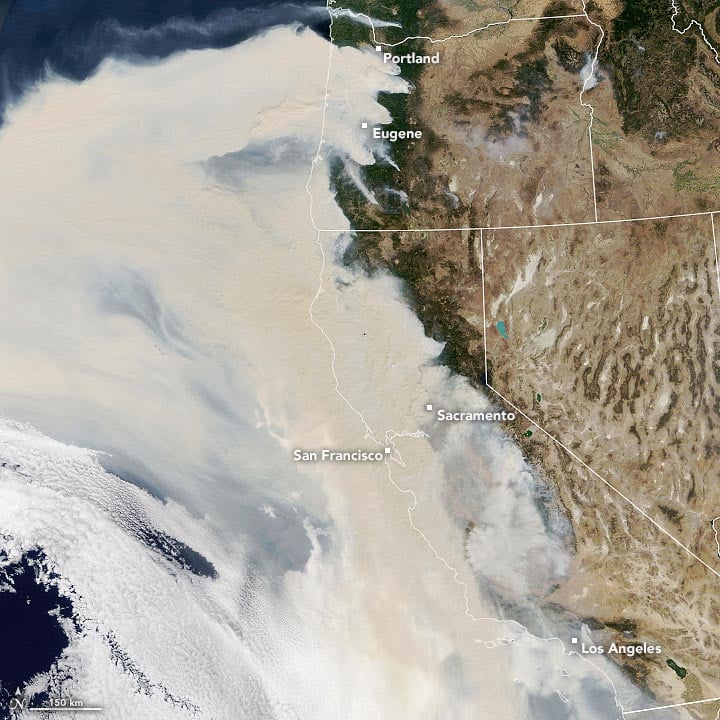
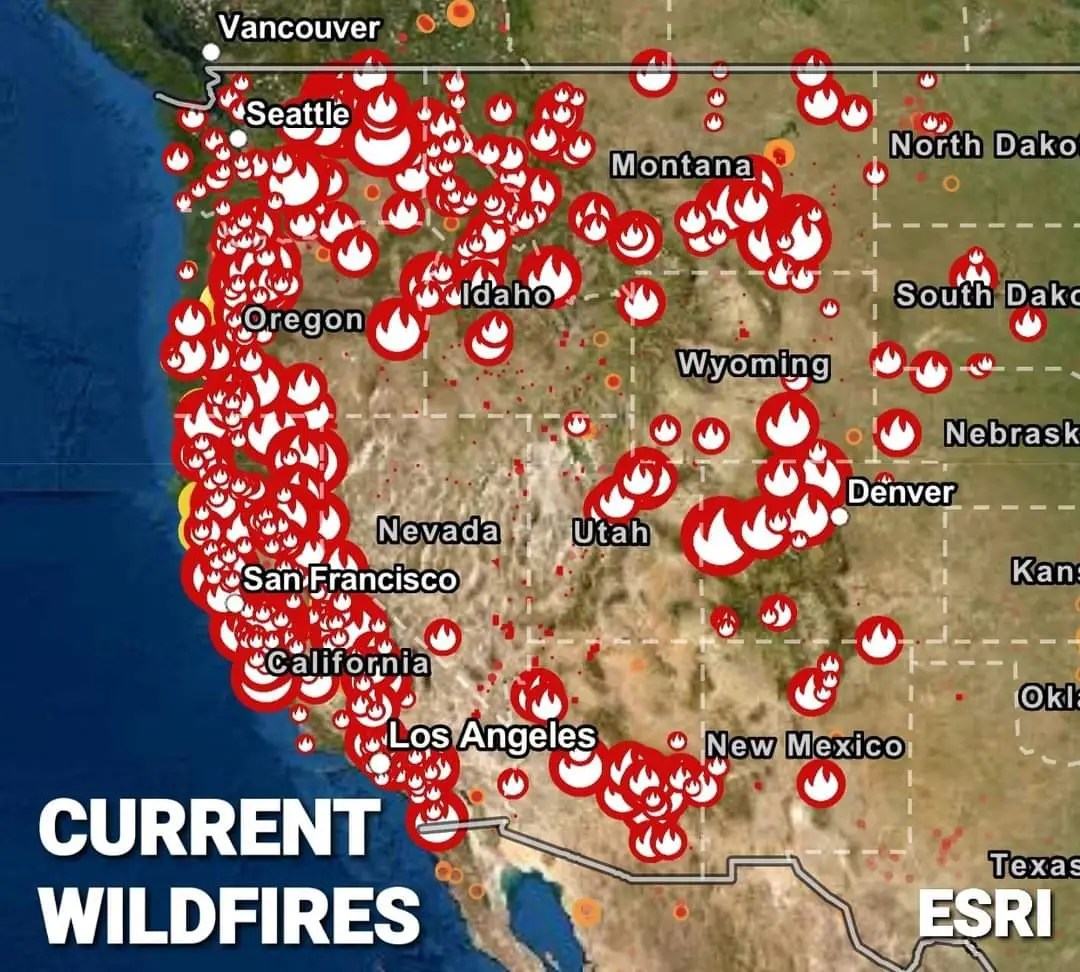
Meanwhile, the Holiday Farm Fire up the McKenzie River corridor was 0% contained and already 37,000 acres. The hazardous smoke had caused an air quality index of over 300 and rising in the Willamette Valley. On the coast, the AQI was 150, which is still considered unhealthy. One headline read that the air quality in western Oregon was worse than in Beijing. Aerial footage showed astounding images of plumes of wildfire smoke blanketing the west coast. I was shocked to see wildfires dotting entire mountain ranges in northern California and Oregon. The west was on fire and it was unprecedented in my lifetime.
Even though I knew there was a wildfire burning just a few short miles away, I felt safer than I had in days. Autumn and I quickly fell into a deep, exhausted sleep. Guilt tugged at my eyelids as I drifted off, and I tried to ignore it. I knew if it weren’t for my postal service union settlement money, none of this would have been possible. I thought I’d made the right decision coming to the coast and escaping the smoke, but I still wasn’t sure. My fiancé had been distant ever since I’d told him where we were.
Wednesday
To comfort and reassure myself, I analyzed the AQI information over my morning drip coffee. Children and the elderly were not supposed to be out in the hazardous air. I thought of my grandmother, who’d always been my closest confidant. I called her in Arizona to tell her about the craziness happening in Oregon. I let her know where we were and that we were safe.
“Yee-gads!” She responded. “That sounds absolutely awful. What about all those farm animals? Are they going to be okay?”
“I don’t know. I can’t think about that, honestly. I’m on a deadline.”
I told her what I said about him taking care of the farm, and me taking care of Autumn. To my surprise, at the end of our conversation, she said she was proud of me. Something about my maternal instincts.
The things my grandmother was proud of sometimes came as a surprise to me. Like the time I got suspended for punching a girl in the nose during math class. That time, she was proud of me for standing up to a bully. The world wasn’t so black and white. It felt good to have someone on my side.
After the conversation with Grandma Peggy, Autumn and I ventured outside willingly for the first time in days. In the lobby, during check in, I’d learned that some people staying there had been misplaced due to wildfires. They were meant to be there. It was a last resort for them. For us, not so much. I didn’t want to let on that a wildfire hadn’t actually made it to our town. That we were just escaping the smoke.
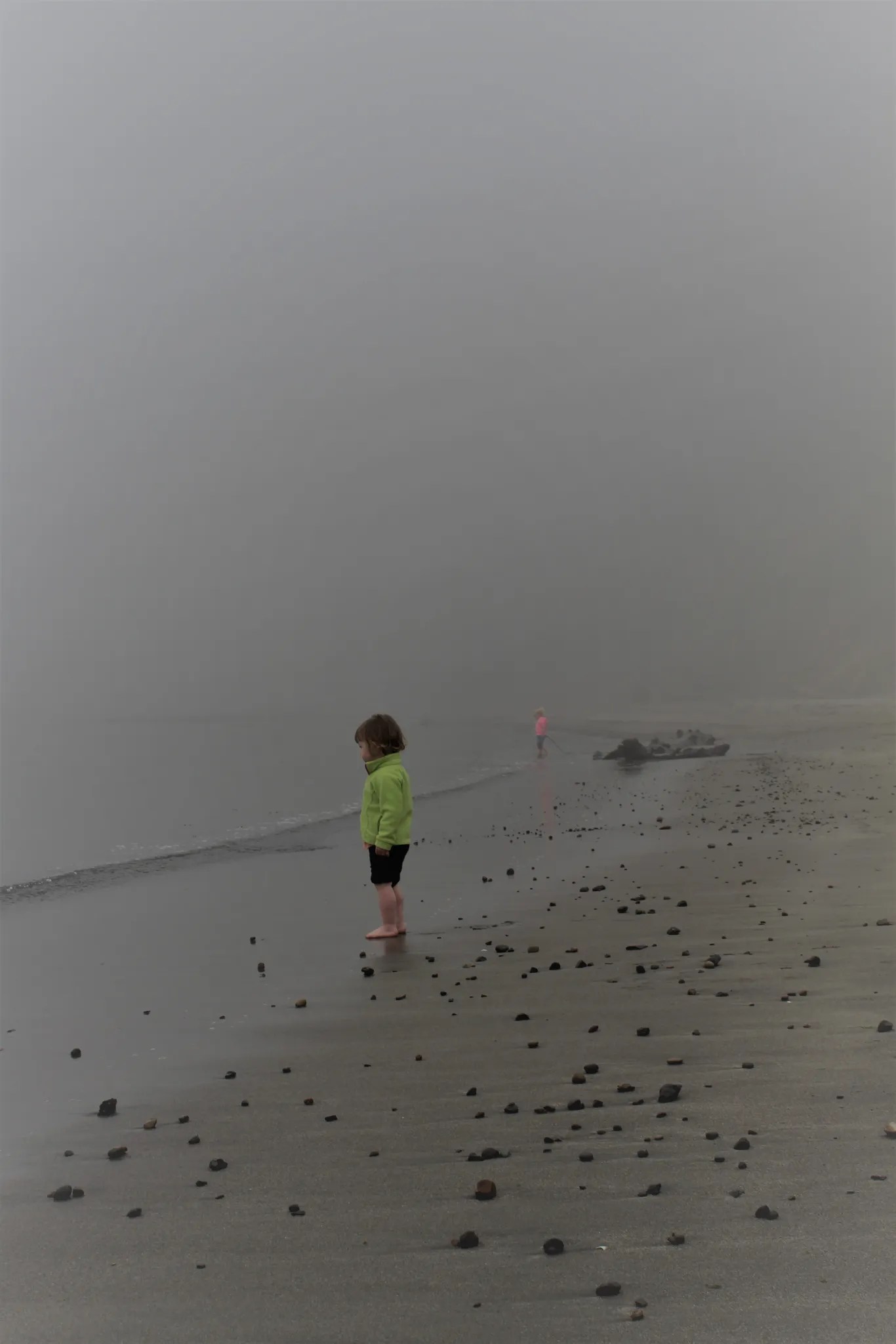
We walked a narrow sandy path down to the shore. Above the sea, the sky wasn’t clear but the salty air was so satisfying that I ate it in gulps. It was like the ocean produced an atmosphere all its own. The freshness was a gift. Autumn didn’t act like she knew what was going on with the wildfires, but as she ran up and down the beach and for nearly an hour, I felt like maybe I had done something right. I felt like I had done something that made sense to me, even if it was a little privileged.
That night I stayed up and wrote my article that was due at midnight. The writing came naturally. I wished I could sit there with my fingers pounding on the keys for days. Not only was writing a welcome distraction, it was also completely necessary. It simply had to happen, especially since I’d bounced on Monday’s Zoom meeting.
Thursday
Every day I called my fiancé to ask if we had any water on the farm yet. That would indicate whether we would go home or not. Even if there was no electricity and even if the AQI was still 500, I said we’d return if there was water. Despite a good friend of mine quipping “Well, have fun,” over the phone, I knew we weren’t on vacation. We needed a fair amount of water to cover the basic washing, cleaning, food prep, and cooking back home. I needed something to work with. A couple five gallon jugs, something.
The whir of helicopters outside became a constant, no matter where you were in western Oregon. A good sound or a bad sound, I couldn’t decide. There were still bone dry weather conditions and gusty winds. Dad had been evacuated. The Red Cross put him and others up in a hotel in Crescent City.
September 10, 2020 “Wildfires have burned over 800 square miles in Oregon” –Wildfire Today
Being from northern California, wildfires weren’t foreign to me. But they weren’t commonplace, either. I remember as a kid the first night I got a glimpse into the terror that fires can present. Late at night at my grandmother’s house, we were watching a program that detailed the 1991 fires in Oakland, California. My grandmother fell asleep and I, scared straight, pulled my covers up to my chin. I was obsessively envisioning orange embers tapping at the windows. I was terrified.
Naturally, I’d already come up with an escape plan from our Bandon hotel room. I knew that from our hotel room to the beach was approximately 264 steps. One step equated to roughly one second. So in four minutes, with Autumn strapped snug in her Ergopack, we could escape to the beach via the trail. Half the time if we were running instead of walking. The beach, where there were lots of rocks and sand. The beach, where there were no trees. Going down this rabbit hole in my mind led me to envision the National Guard rescuing people off the coast of Oregon. They would take us all out on boats, where we would see our former homes, our former habitat, aflame. A scenario, I later learned, that was not far removed from what played out on the coast of Australia during their unprecedented brush fires just one year prior.
Friday
September 11, 2020 “At least six people dead, more missing in Oregon wildfires” –OPB.org
Because of the high cost of the hotel room I was in, after a few days, I called around and found a cheaper room at the Red Lion Inn in Coos Bay.
Coos Bay was closer to the farm, where there was still no water, and where the AQI was still off the fucking charts. Moving hotel rooms was an almost shocking thing to do during the pandemic, as the goal was to prevent as much contact with others as humanely possible. I wiped down all the surfaces myself when we entered the hotel room.
The truth was, at this point I was probably more likely to bring harm to us by catching the Coronavirus, stepping on a jellyfish on our daily excursions to the beach, or getting t-boned coming out of a coffee hut. I vowed to start paying more attention to things other than the smoking woodlands all around us. I didn’t want to put us in unnecessary danger. I needed to get a grip, but all I could do was grip my cellphone and consume whatever I could online about the unprecedented wildfires. I couldn’t spell out “wildfires” in my journal without putting the word “unprecedented” before it.
If you know anything about Paradise, California, you know that in the span of forty-five minutes the town was in a grid lock of bumper-to-bumper traffic with about 30,000 residents trying to flee and the police department hanging up on people due to the volume of calls.
“If you fear for your safety, even if you’ve not been evacuated, you can leave, ma’am,” a police officer reportedly said.
One minute it was falling ash, the next minute it was all up in flames. School children were reporting falling, flaming branches on the playground. People had underestimated mother nature’s fiery roar.
No one could believe it, except maybe the climate scientists.
Saturday
Most other farm families couldn’t afford what I was doing. Did that make it inherently bad? A girlfriend, who I’d spoken with on the phone, the one who’d said, “have fun,” was under the thumb of her long-term partner. She was scared too, I knew, and her kids would have really benefited from being able to run around on the beach like Autumn was. I invited them to stay in our room, but deep down I knew her partner wouldn’t “let” them. I also knew that domestic violence starts with being provided just enough to live by, but not enough to leave by.
Our world was quickly becoming divided by those who were going towards the flame, and those who were running from it. Me? I was clinging to a wet seashore. But I knew deep down that I was one who was built to go towards the flame, and that my newish role of mother was setting me apart. Whenever I could, I splayed my memoir pages out on the hotel room desk, revising furiously, as if the world were on fire. The guilt had me feeling like I should be “doing something.”
While she was sleeping, I stepped outside the hotel room door. I’d brought along my cannabis vape pen. I took a long drag, exhaled. The sky was still sepia-tinged. How strange it will look when it finally goes back to normal. Which it will, I assured myself. A blue heeler dog gulped at the air as he leaped and charged at birds in the parking lot. A cop car raced down the highway, sirens blaring. My body quickly reminded me how fragile my nerves were, jumping at the sound, which was so loud and so close. A single plastic bag floated in an algae-filled swimming pool below. I stared at it and thought of how void our current existence is of celebration. About how alive it is with fear. Then I stepped inside and logged onto Instagram, forgetting about the apocalypse for an hour or more, before calling the farm again to ask about the water status. I was wondering when we would return home. Wondering if it could ever be like it was before. If we could ever really go back.

