Field Notes

Wild irises spring up after the daffodils line the city streets, after the trillium dot the animal paths in the forest. Wild irises, tiny, delicate, purple, and white, are no match for the beasty ornamental varieties, of which three flowers can fill out a vase. But still, I prefer them wild. Wild irises hint that summer is coming. Naturally, irises have always reminded me of Dad. All my life they reminded me of the time of year that signaled our outdoor quality time together. Hiking, foraging, and when the snow melt eased up, swimming. In early May 2022, I got a call from a doctor in the intensive care unit in my hometown in California. “Come,” he said. “Quickly.” Dad had an accident and he wasn’t going to make it. Four days later, pulling up the long gravel drive to the farm after having returned from California, I glanced out the open car window to see that the wild irises had pushed up through the earth while I was gone. They’d emerged and made themselves known while I was releasing Dad’s spirit back into the wild. How could they? It felt like either some kind of cruel joke or, on the other hand, a symbol of peace and the natural order of things. It was the first of many signs and synchronicities to come. Most of them I would make note of in my journal, the messages too compelling to ignore. The irises have arrived again, right on time, to greet me.

Book Reveal! Freeing Our Frozen Songs: Transmuting Pain to Power

Hello faithful readers,

I trust the seasonal changes, wherever you may be, are inspiring you to slow down, go inward, and savor the feeling of autumn’s presence. Those things are certainly true for me. On top of it being a very special time of year, the time of year that my daughter and I both celebrate our birthdays, I am also celebrating another milestone: The upcoming release of our anthology “Freeing Our Frozen Songs: Transmuting Pain to Power.” I, along with nine other artists, collectively and intentionally created a book with the mission of generating more healing and acceptance in a sometimes harsh and apathetic world. Because I have yet to find a better way to reduce the shame and stigma of surviving, well, anything, than through storytelling.

Freeing Our Frozen Songs: Transmuting Pain To Power

Ten Oregon storytellers and visual artists are featured in this anthology. Our curator, Kirsten Fountain, believed in us, valued our individual stories, and honored us as the true experts in our lives. I am so proud to be revealing eighteen poems that I have never before shared. Poems that explore my own personal journey from pain to power.

I believe in not only witnessing, but honoring, celebrating even, the full spectrum of this human experience. That is why I am preordering, in addition to my complimentary contributor’s copy, the book Freeing Our Frozen Songs to place in the library at the Trauma Healing Project in Eugene, Oregon.

I invite you to preorder our collection via Kickstarter and consider sharing it with a loved one in your life, particularly one who has endured trauma of any kind, at any time. Or you might consider donating it to a community library. Or keeping the book just for yourself.

If that feels like too much of a commitment at this time, I completely understand. You instead might consider a “sneak peek” of our anthology on our website https://freeingourfrozensongs.com/. There, you can preview samples of our work, and get to know each contributor more intimately by reading our biographies and artist statements. Of course, you also might consider a simple share on social media or an email forward as a way to show our contributors and curator some love.

Regardless, know that your story is always worthy. Always. And autumn time is a wonderful reminder of the sweet release of letting go of that which no longer serves us. Like the leaves on the tree, we too reach our peak, change colors, and transform into something brand new, sometimes unrecognizable, but always with a thread of the familiar still hanging on.

Please be blessed on your journey, and I will too.

With thanks,

Mama Bird

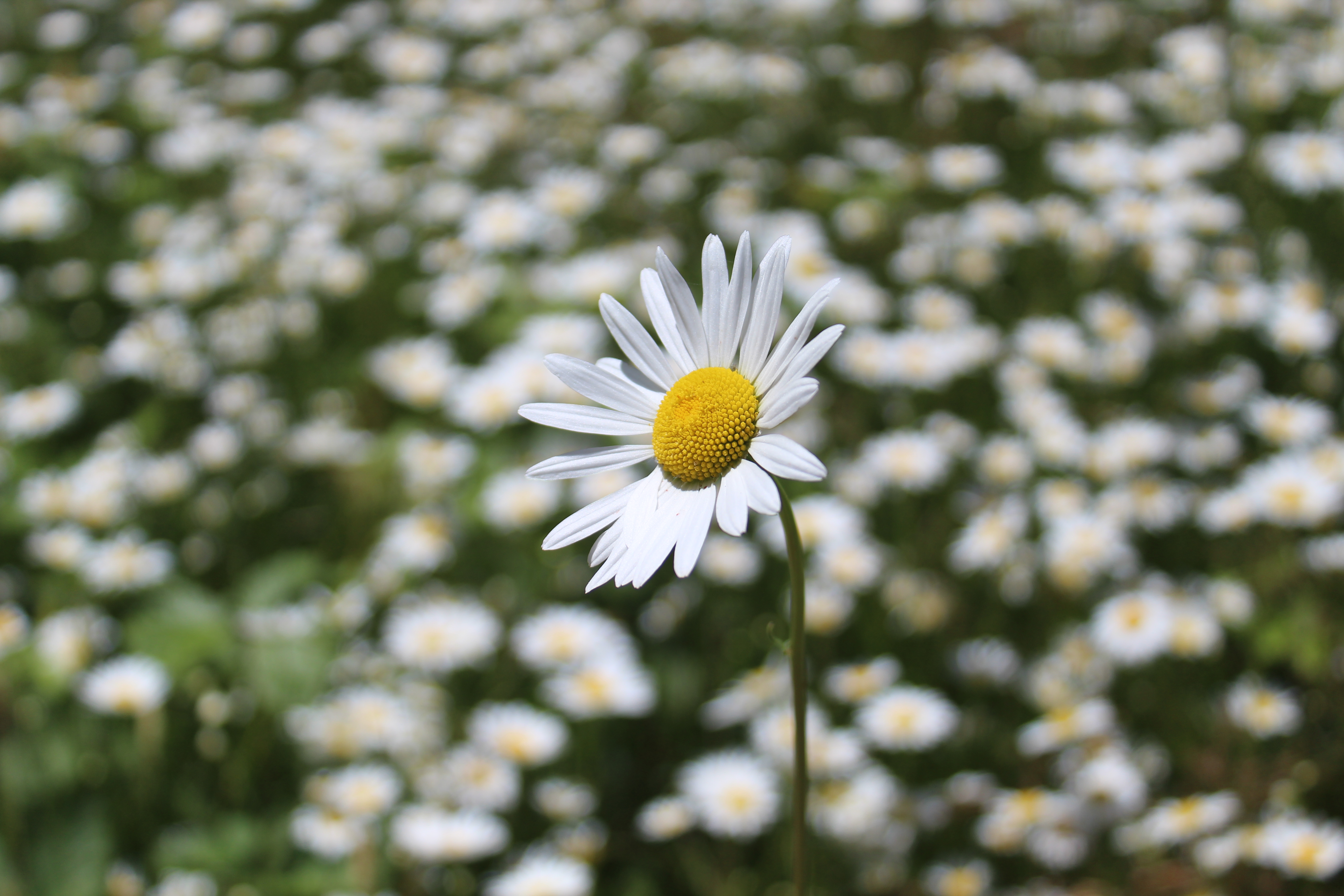
Dancing With Daisies

“What makes you so special?”

“Nothing and everything all at once.”

Shasta daisies always bring to mind Spring, 1989, and the kindness of strangers. I was four years old at the time, the same age my daughter is now. I was one of a dozen other mini ballerinas parading across the stage at Crescent Elk Auditorium for our annual dance recital. It was the same stage I would awkwardly walk across a decade later during my eighth-grade graduation. Even more awkward having sipped from a small bottle of Peppermint Schnapps beforehand. (I sure was a special student. At-risk, I think they called it.) That was the first and last certificate of anything I would ever get in my hometown.

The day of the recital my four-year-old brain got tripped up after having walked out onto the stage, looked out to the audience, and noticed my Great Grandma Gladys sitting there. I froze. Usually my Great Grandma Gladys was in her manufactured home by the sea. In her dusty pink recliner. With my “Barrel of Monkeys”–a toy she kept just for me–on her TV stand. Usually she was at home, in her nightgown, smelling like Vix VapoRub and beef minestrone. But on the day of my ballet recital, she was right there in the audience, sitting with my Grandma Peggy, Great Aunt Tina and, of course, Dad. I almost couldn’t believe it, until she raised her hand to wave, palm facing me, wiggling four fingers and smiling. I was transfixed. My face turned pinker than our ballet shoes, and I stood firmly in place for the rest of our number, shyly waving back at Great Grandma Gladys while the other ballerinas did their grand plies and jetes all around me. I didn’t even move when the music stopped. Eventually an older ballerina, dressed head-to-toe in black, picked me up and whisked me backstage. I know because we have a video recording of the whole thing.

At the end of the recital (this is where the Shasta daisies come in) all the ballerinas from the entire recital went out on stage to take our final bow. The leads got big flower bouquets and rounds of enthusiastic applause. The younger mini ballerinas all got single red roses. And then there was me, the last mini ballerina and no more red roses to go around. Surely it was because I’d goofed up on my part, not even dancing like we’d been practicing for. But before anyone could boo or throw something or–even worse–collect their jackets and leave, a nameless, faceless stranger handed me a single white Shasta daisy on a sturdy green stem. They must have run outside and picked it.

The Shasta daisy set me apart, just as I had set myself apart earlier, as a stage frightened little girl. Not all of us are meant for the spotlight, or even for destined for the things that everyday people take for granted–a mother to look after you, graduations, trophies and certificates, a bedroom to yourself, red roses…That day in the auditorium was the first of many more humbling moments to come. But looking back, it reminds me that no matter how difficult the circumstances are, there is always an angel in the wings. The Shasta daisy is a reminder that I am both special and not special all at once.

Dad and I after my ballet recital. A single Shasta daisy in my hand. Spring, 1989.

If I Took My Grief Out to Lunch

Dear Reader, Throughout the month of October I, along with a small group of other writers, wrote about loss in “Write Your Grief Out” with Anne and Maria Gudger. Here is one excerpt from that period, based on the prompt “If you took your grief out to lunch, what would you talk about?”

If I took my grief out to lunch, we’d talk about the way things used to be. How the other day I saw a small child sending crab pots off the dock into the ocean with her father. The way we used to do that before you became a vegetarian. Before you quit crabbing in the wintertime and raising rabbits for meat in our backyard. We’d talk about way before the tofu and carob phase, when you ate burgers and drank Budweiser. But that was never you, so I was glad I got to see your next phase too: your altars and spiritual books and how a real live guru came to visit us and stayed in our home and went on long walks with you in the woods.

If I took my grief out to lunch, we’d talk about the way things used to be. How half the pictures from when you were a boy show you at the top of some tree. Or expertly showing your hog for 4-H. Or snug in the middle of three sisters, volleying between tormenting them and being the soft shoulder they could cry on. How you had so much lived life before me, but it took you dying for me to really see that. The boy you’d been–wild as they come. The teenager you’d been–different, but popular and carefree. The man you’d become–a young, single father, your biggest challenge yet.

If I took my grief out to lunch, we’d go up river afterward. We’d blast Johnny Cash through the redwoods, roll down the windows, and stop for a drink of spring water gushing from Carter Falls. I’d take my grief inside the culvert under South Fork Road, where the runoff pours into the river in wintertime. We’d steady ourselves on the rocks, crouching just to watch the water run. Solely for the meditative purpose of it. We’d have no agenda. We’d have no to-do’s. We’d see a bald eagle and raise our hands to our chest in prayer. We’d skip rocks. We’d drive up further and park by Rock Creek. We’d travel up creek on bare feet. We might see a wild animal drinking from the stream; or a fairy ring of mushrooms, undisrupted. We’d awe.

If I took my grief out to lunch, we’d talk about the way things used to be. The time we rode elevators to the tops of the tallest buildings in San Francisco, just to look out the windows. Danced with other Hare Krishna devotees at Golden Gate Park, real ones who lived in the temples year round, not just for a few weeks in the summertime like we did. Venice Beach. Berkeley. Vancouver B.C. All the food and the flowers and the strangers. How we’d come back to Crescent City in September tanned, hair windblown and faces happy, just the two of us. No mom in sight and all the freer for it.

If I took my grief out to lunch we’d talk about the way things used to be–because it’s the best balm to the way things are now. Less colorful. Less natural. Less free. I don’t know many daughters who can claim that the best gift their parents gave them was freedom and exploration–just for the sake of it. Without agenda. But if I took my grief out to lunch, we’d talk about that.

With love,

Mama Bird

What Matters Most

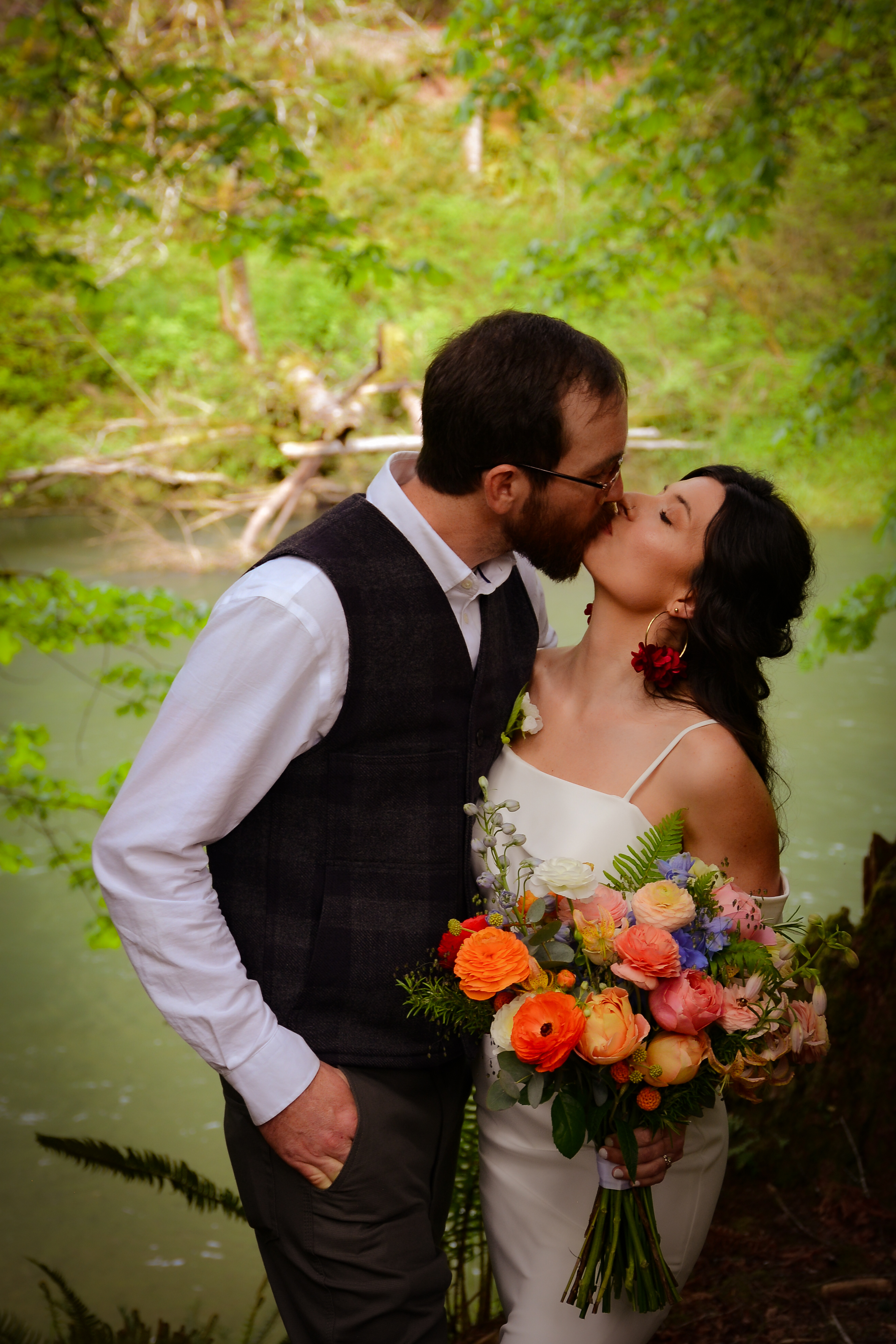
I shouldn’t still be thinking about the earrings I wore on the day of our wedding on Sunday, May 22, 2022, but I am. I’d wanted to convey that, despite Dad’s passing less than three weeks earlier, I was OK. It was all good and everything was fine.

But when I look back at the photos, I see me the day before the wedding, running frantically around the mall alone, bombarded with choices. There were plain gold hoops, bright neon feathers, faux diamond drop earrings, shaped like leaves, and the ones I got: showy gold hoops with crimson silk flowers. The earrings were distracting, and I hadn’t noticed that at the time.

What didn’t help is that until 72 hours before the wedding, I didn’t know which dress I was going to wear, my original choice never having arrived in the mail. It also didn’t help (or maybe it did) that, since Dad died, I decided that nothing superficial mattered anyway. It wasn’t what you wore, it’s what you said. It isn’t how you look, it’s how you see.

So on the one hand when I look at those photos, I think of those earrings as my “fuck it” earrings. The slap it all together and play-it-cool mood of that unique moment in my life. The wishing I could hide in plain sight. But the only statement those earrings seemed to be making was “whatever you do, don’t look at me.

Do I wish, instead, I’d have selected the faux dangly earrings shaped like leaves? Yes, I can too clearly picture how they would have sparkled when catching the sunlight through the trees. But would I take it back and change it? No. Not really, because something else would have been off. As is in life in general. As is when you are having a wedding and you are having a funeral.

In this life, it really, truly isn’t about the perfect look and the photo-worthy setting. And I give myself grace that I knew that going into it, and I placed my priorities elsewhere when I didn’t give myself a lot of time to shop for the earrings, and I didn’t take along a friend. I didn’t really get that “bride moment”…the one that they were selling me. For me that fantasy involved a careful putting on of my high-heeled shoes (I would wind up wearing slip on leather wedges), a cheers with my bridal party, Lorde’s “Royals” blasting in the background, my “Cinderella” moment. What I got instead was a mad dash to the mall for last minute, unplanned accessories, and, in the bridal suite, our children running around underfoot, only the sound of shrieking and chatter in the background. What I got instead was real life, what actually matters, the people, the experiences, and yes, even the innocent fashion mistakes.

Now when I think back on our wedding day, I remember being thankful it didn’t rain. I remember being grateful nobody got hurt. I remember that “My Sweet Lord,” Dad’s song, came on the radio on the drive to the mall and it felt like it was playing just for me. I remember I cried. I remember I was fragile, deep down. I remember I couldn’t afford to crack. I remember writing and practicing my vows. I remember carefully putting out the ceramic dinner plates and silverware, buffing smudges out of the wine glasses in the dining room late into the night before our wedding.

I am trying to forget the sparkly earrings that got away. I want to let go of notion that tells me our wedding needed to be more perfect than it was. That I needed to be a better bride. That I had somehow let something slip. That I should have spent even more money. Then, maybe, things would have really been perfect. Maybe. When the only thing that honestly would have made that day better, is having Dad there for it.

Love and mysterious blessings,

Mama Bird

Town

There is nothing more difficult
I believe
than relaxing

Than just being

We are human beings
Not human doings
Yet who out there is willing
to “just be” with me?

My most treasured doings
are working
then eating
then shopping
then teching out
then vaping
in no particular order

I am not doing a very
good job of setting myself up
to just be

Upon waking
I am already grasping grasping grasping
it’s astonishing
and yet today
I felt a calling
to be centered
and now, despite myself,
and after having taken a spontaneous U-turn,
I am laying on my belly in the grass
at a park and writing this poem

And for at least these few
short moments I will be free
from all of that grasping

I will be right here
barefoot
just being

This poem the closest
I will get to being present
because soon I will succumb
to the tornado of wants and desires
that is town
that is tech
that is quick and easy
and in and out of
my brain in a heartbeat

All The Tattoos I Never Got

Tattoos are expensive. But not the first tattoo I never got. The first tattoo I never got was going to be free, because my friend who was fourteen, had an older brother who was sixteen, and he was doling them out for free. He may or may not have been on something. But the real reason I didn’t get the first tattoo I never got–a flaming heart on the inside of my right hip bone–was because I knew Dad would kill me. Or that he’d want to. Or, at least, he’d say he wanted to. “I could kill you,” I could picture him saying, fists clenched like he wanted to fight, but without a fighting bone in him. All soft on the inside like the bubblegum ice cream he bought me down at CC’s Diner.

Plus I didn’t think my friend’s brother could do color, and I didn’t want a green flaming heart, I wanted a cherry red one with licks of yellow and orange flame coming off of it, like was on the sides of the hot rods down at the annual Sea Cruise.

The second tattoo I never got wasn’t quite as symbolic as my “love equals pain” flaming heart. Like my friend Aimee had done, I was considering a full back tattoo–a landscape. The landscape of home. A redwood tree, and the ocean, and maybe some rhododendron. The plan only got as far as that–a fantasy–before cost prevented me from even considering it. Months later, at 23-years-old, I moved from the high desert where I was living in Arizona, back to the Pacific Northwest. Back to the big trees and the sea. It hadn’t been about having a tattoo at all, but about answering a calling.

The third tattoo I actually got close to getting. It was on a whim which, I was sensing, had to account for at least half of all tattoos out there. It wasn’t even during a break up, or anything. I can’t even put my finger on why I was going to finally get the tattoo I never got. Something about being hip, or the potentiality of appearing as hip as I felt.

I almost went through with it. I thought about it for several days before walking into Cry Baby Tattoos in Eugene. I presented the tattoo artist with an image from my phone: two minimalist looking tattoos, a sun and a moon. Stick drawings for the backs of my arms, placed above my elbows. The sun on my left arm, the moon on my right. I kept thinking of a favorite quote, “Three things cannot be long hidden: the sun, the moon, and the truth.”

The tattoos would be a reminder to always be truthful, to seek truth in all situations. To demand truth. To be truth.

As soon as the tattoo artist stenciled the designs on my arms, a perfect replication, I looked into the mirror and suddenly my elbow wrinkles jumped out at me. I hadn’t noticed them before. And when I bent my arm at the elbow, the sun and moon stretched, misshapen.

When I confessed to the tattoo artist that I felt conflicted, and didn’t think I could go through with it, he responded gracefully, “It’s your body.”

The next tattoo I never got were the coordinates of home:

41.7353923 N -123.9828519 W

It was either that or a fiddlehead fern on the inside of my left wrist, to remember Dad by. Later, I learned that I didn’t need the coordinates of home tattooed on myself anymore. Because now that place would forever be a part of me. I could plant trees in Dad’s yard instead, and spend decades watching them grow. It seemed I had outgrown all of the tattoos I never got, which lead me to thinking that from here on out, maybe I should just let my scars do all the talking.

Moon Teachings

79 days ago, on May 3rd, 2022, my dad was knocked off of a tall ladder by the force of a tree branch he was limbing with a chainsaw. It happened at an odd construction job he took, painting some house. A side gig. A split second decision he made at the request of a neighbor.

That evening, after getting the call that Dad was in the ICU, I drove from Oregon to Northern California along the coastline. His only child, I was frantic and pleading with the Goddesses to save him. I worried about everything from the fate of his soul, his consciousness; to his potential suffering.

Gazing out the window at the ocean rolling by as I drove, I noticed the moon: a waxing crescent in Gemini. The night sky was crystal clear and the moon and the ocean were a painfully beautiful sight. An inky blue sea. A golden yellow moon. Brilliant silver stars. I needed everything to stop being so perfect. I needed the moon to remain as it was, and not to move an inch until everything was sorted out. I felt anything but in control. All was chaos and confusion…so how could it look so peaceful? 48 hours later, Dad would dearly depart us.

Today, at three p.m. on July 21, 2022, 77 days after he died, I stepped outside after spending all day inside a building at the university where I work. I looked up at the blue, cloudless sky and noticed the white reflection of the moon. A waning crescent moon in Taurus. It was another painfully beautiful sight, this moon, coupled with the gorgeous, sunny weather and flowering bushes lining every path and street. The moon had risen and set, waxed and waned, over and over and over again since the days of Dad’s passing. Had the moon betrayed me? Relentlessly marching across the sky? Didn’t the moon get it? Any why does summer feel the need to carry on, too?

Perhaps, I thought. Just maybe, I cautioned…maybe nature knows how to let go. And we don’t. My body softened, shoulders releasing just a little bit of tension. Perhaps I should be bowing to the moon and reflecting on its wisdom, rather than questioning nature at all.

The Importance of Showing Mercy in Memoir

Like all of us, I’ve always been of the belief that actions speak louder than words. But over the past several months, I’ve been thinking about how loud words do speak, particularly if you are a memoirist.

I’ve had many years of writing and publishing (mostly here on my blog) to teach me that those who are written about will read your words closely and they will take them to heart, naturally. I have also had the luxury–I humbly admit–of those characters showing me extreme grace and forgiveness.

My memoir writing journey began in my very early twenties, and because I knew virtually nothing about memoir, other than having read a couple of them, I approached my writing this way: I wrote everything about everyone and used all their real names.

Now, I look at my pages and I see the truth, yes. But I also look at those pages and see real live people with real live emotions, and I have to honor that. At this juncture, having written the meat of the story, and revised it several times over, I have a choice: Do I change names or soften the story? Do I painstakingly sort through and assign similar sounding names to key characters? Cousins, boyfriends and bosses? Or do I keep their names and speak as if they are there in the room with me: with honesty, integrity, and compassion?

Writers in the genre have all heard the same line, “If they didn’t want to be written about poorly, they shouldn’t have behaved badly.”

It’s a fine starting point, a line to help you get your pen moving across the page. But I am curious to hear from other aspiring memoirists if it’s that same sentiment they think of when crossing over the threshold into querying and publishing.

Because, after all, most books do not become overnight bestsellers. What if we memoirists, in the end, sell our books only to our family members. If your book subject matter, childhood trauma, wouldn’t make for some awkward Thanksgiving dinner conversation, well I don’t know what would.

But here’s the thing, when it comes to me, the majority of those who have purchased the books I have self-published are not my family. I haven’t had a Thanksgiving with my mother, ever, and abandonment, whether comfortable or not, is central to my story. I cannot untangle myself from the truths and tell some other story. But maybe I can tell my story with a balance of both transparency and grace. Maybe. That’s what I hope for.

Back when I first started writing The Poetry of Place, long before it had a title, long before I’d changed my mother’s name to Moonbeam, and long before I started dragging my pages through critique group, it was all about the therapeutic benefits of memoir. I didn’t think of it in those terms back then, but looking back I’d really, really, really needed to exorcise my story. I was always a writer, from elementary school on up. So my story–once I finally realized it’s potential–became viable subject matter. And my intention morphed from the therapeutic benefits of writing to the creative challenge it presented: Writing a book worth reading.

So rather than “If they didn’t want to be written about poorly, they shouldn’t have behaved badly,” how about, “Hurt people hurt people.”

Most people agree with that statement, and I believe the message is being conveyed through my memoir. Therefor I cannot take responsibility, or blame, when expressing, in so many words, something that we all agree is true, that “hurt people hurt people.”

But that’s what it all comes down to, responsibly. Because memoirists aren’t just airing our dirty secrets, but in some cases the secrets of others, too. In turn we have the potential to create a significant portion of someone’s legacy. And that is a responsibility that should not be taken lightly. Ever.

As I cross over the threshold into querying (that’s the long process of landing an agent or a book deal), and as I refine its final pages, imagining its bound version, I weigh my options. I am trying to strike a balance that honors both what I’ve endured, and protects the inherent innocence of those surrounding the story itself. Because none of us are perfect. Not even close. I think the most helpful advice I have heard is to be as hard on myself in the story as I am being on others. I assure you, given my nature, that my flaws will come across strongly in the final story. No matter what version you get.

Love (above all else),

Mama Bird

This is How I Care for Myself

Only build what you can properly care for.

This is how I care for myself:

Some people listen to their bodies, I listen to my heart. Of course, it’s louder when it’s pumping full of blood, so I take big, long strides up and down the hillsides near our home. When the sun comes up in the morning, I raise the blinds in both bedrooms and make two beds before making the coffee. I work for that cup, I earn it.

This is how I care for myself:

If I have time, I sip my coffee seated by the window. I especially love the blue sky. I didn’t appreciate it as much pre-pandemic, but now, after everything, I value the blue sky much more. If I don’t have time, the coffee goes into a dented aluminum mug, long on function, but short on looks.

This is how I care for myself:

I paint my toenails a sunny yellow. I paint them myself because it’s more satisfying that way. I offer to paint other people’s toenails too, because I secretly like to do that. I love imagining the joy on their faces when they look down at their toes.

This is how I care for myself:

I write in my journal and I don’t care about the scribbles and trailing thoughts because I remember a time when it was all about the journey and not the product. It really can’t be any other way and still be true.

This is how I care for myself:

I register for a grief writing group because feeling and writing is what I do. And feeling is better than numbing. I do it to help with the anticipatory grief I am experiencing over my grandmother’s health. “It’s an investment,” I remind myself.

This is how I care for myself:

I sing and dance with the children, even when I really don’t want to (even when I’d rather be writing).

This is how I care for myself:

I only take what I have it in me to give in return.

This is how I care for myself:

I take social media fasts on the weekends. It doesn’t transform my life, but it helps me stay accountable to the things, and importantly the people, that really matter to me.

This is how I care for myself:

I put invisible, impenetrable walls up around me–porous for only a few.

This is how I care for myself:

I knock them down from time to time. I rock n’ roll.

This is how I care for myself:

I learn, slowly, what boundaries are. I communicate my needs, first to myself and then to others.

This is how I care for myself:

I get my hair trimmed regularly. I don’t need a cut, exactly. I just like feeling cared for. I wear a big, soft shawl the color of wine.

This is how I care for myself:

I accept whatever weird and wacky–or totally mundane–way I have of taking care of myself. I trust myself–now, finally–to care for myself in healthy ways, the best ways for me. I do these things regardless of what others think of it.

This is how I care for myself:

Some people listen to their bodies, I listen to my heart. Of course it’s louder when it’s pumping so I take big, long strides up and down the hillsides.