My Greatest Teacher

It’s been going on four years now, Dad. You’d be turning 63 years old in November. Now that I am turning 40 myself, I’m growing wiser (and more disillusioned) with every day. I’ve never been more aware of this stupid human suit I’m wearing. It’s incredible what a difference a few years makes. I wish I could tell you all I’ve learned since you departed. I would ask your forgiveness for the times I articulated your faults on the page, just trying to understand. I would tell you that I understand now. I get it more, Dad.

These are the words rattling around in my mind this afternoon: poverty is a systemic failure, not a personal one. After you died, I discovered that it was a measly ten thousand dollars standing between us and our dreams. I learned that if you hadn’t been literally robbed of your cash, we would have had a home–those sturdy walls and saloon doors we’d sketched out so carefully. Why didn’t you ever tell me that? About the time you got robbed of ten thousand dollars and everything changed?

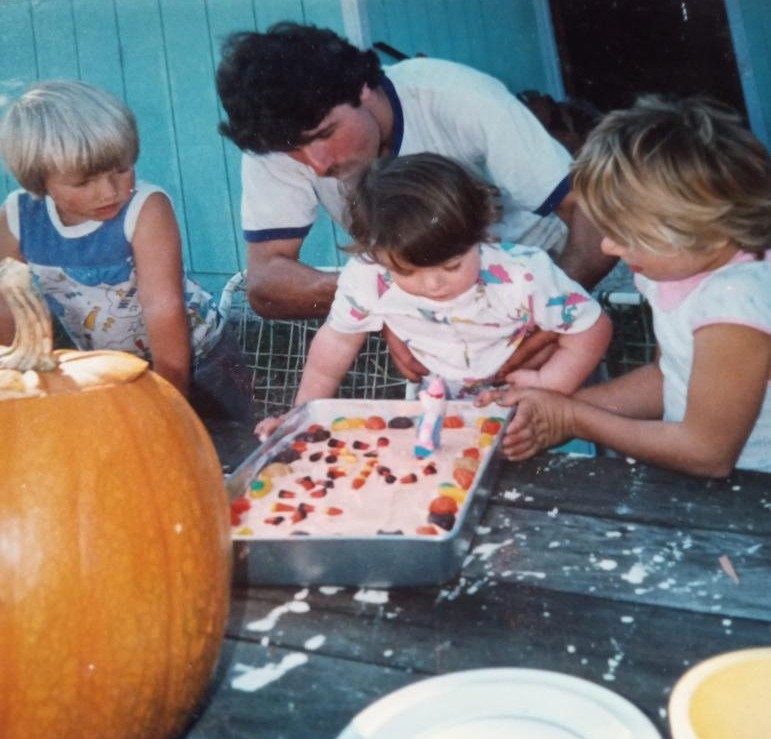
Today, Aunt Julie shared a picture of us that I’d never seen. It was taken on my second birthday, outside the house on Glenn Street. Someone (was it you?) made me a sheet cake and spelled out my name in candy corn. What I love about the picture is that as I am blowing out my birthday candles, so are you. You were ever encouraging, attuned, a gentle wind at my back from day one. God, I look like Autumn in the photo. A few years ago, unwittingly, I also decorated her birthday cake with candy corn. October babies.

You don’t want to be forgotten, do you? I know this because every now and again you pop up. A photo I’ve never seen. Your song playing on the radio. Your initials emblazoned on a barn along the interstate. But most incredible are the thirty-some-odd handwritten pages I recently received from a relative, your descriptions of our early days together. How did it take me all this time to realize that it was you all along? That it was you, legally disabled but spiritually sophisticated, who inspired my love of writing? I wish I could tell you all I’ve learned since you’ve departed, because one thing I know for sure is that you’d be listening.

What I wouldn’t give to scramble up a hillside with you today, sit at the top, overlooking some vista, laughing at the absurdity of it all. Someday I’ll get to reading those pages you sent me from the great beyond. But honestly, it kind of hurts to do so. I opened it once and a line jumped out at me. It read, “I believe in simple living and high thinking.” What more do you have to teach me, Dad? Are you still the wind at my back? What can I do to not be robbed of ten thousand dollars? Anything?

Back Home Before You Know It

Driving past the massive redwood peanut carving meant that we were halfway to Eureka, California. The redwood peanut was also a marker of the town where my mother, Moonbeam, lived. Every other weekend, Dad drove me to Orick for our mandatory visit. Mandatory just meant that the law was involved. The law being involved was practically a law of the universe for people like us.

But the law had little to do with why we were driving past the redwood peanut that day. Except that after my scheduled ear surgery, I was mandated to remain with Moonbeam in Orick–in civilization–until my eardrums fully recovered. It would likely take the rest of summer. My earaches had become regular enough that a physician recommended I get tubes put in to help drain out all the gunk. I would also be getting my tonsils and adenoids removed. The plan was that after leaving the hospital in Eureka–the same hospital where I’d been born nine years earlier–Dad would drop me off at Moonbeam’s before heading back upriver to our home off grid. It would be the longest I’d ever stayed with Moonbeam, my stepdad, and my two younger brothers. I stared out the window as we drove past the huge redwood peanut, anticipating the story I knew was coming.

“That peanut,” Dad began, “was trucked all the way to the White House in Washington D.C. as a gift for President Jimmy Carter. But because Carter was an environmentalist, he shipped it back. He saw it as an insult. Here Carter was, trying to save the redwoods—or what was left of them—and some loggers from Orick send him a redwood tree carved into peanut! What a joke. I mean, can you imagine?”

I didn’t say anything in response. Didn’t need to. Sometimes Dad talked to keep himself awake while driving. Despite that it wasn’t nighttime, I knew Dad was probably tired. He’d worked at the road department all week, helped get my belongings together for the trip, then driven from near the border of Oregon in a car we’d borrowed from a friend of his. I didn’t really know why we were in the car, and not in Dad’s pick-up truck. Maybe the truck got a flat tire or needed a repair. Or maybe driving the car had been mandated. For whatever reason, I was riding in the backseat: precious cargo.

The car smelled horrible and was making my stomach turn. I never got car sickness on windy roads, but I suddenly felt queasy. It was as if invisible cigar smoke was emanating from the maroon velvet seats. Dad didn’t smoke, but whoever owned the car sure did. I was getting nauseous. I tried to lie down, the seat belt digging into my waist. I didn’t know what was worse: watching the tops of the redwood trees zoom by out the window, green morphing to white given all the movement, or closing my eyes. Both felt impossible. The pain in my ears faded to the background as my nausea took centerstage. I heard Dad mumble something about the time. My ear surgery was scheduled to start in one hour, so we’d be cutting it close. I gripped the car seat with one hand and held my other hand to my forehead, trying to remain steady. One more hour to go, and then the hard part would begin.

Naturally, I didn’t remember a thing from my first visit to Humboldt General Hospital–the day I’d been born there. This time though, I’d remember every detail. Starting with how enraged Dad was when I finally puked as he whipped the car into the parking lot.

“Couldn’t you have at least waited until I parked?” Dad yelled at me, swinging my door open.

Dad rarely yelled and never hit me, but in that moment, he looked like he wanted to rip my head off. Now that I am a parent myself, I know the look. It was stress. It was fear of failure. It had little to do with me. Fucking up created shame. Dad couldn’t win. We were late and I’d puked in the car he’d borrowed. This would all make him look bad. It would take time that we just didn’t have. Dad quickly shook out the floor mat, tossing the vomit into some nearby bushes, and then we raced into the hospital.

Before long, the hospital staff were preparing me for surgery. Dad may or may not have told them about the vomiting. It was all happening so quickly. They said I wouldn’t feel a thing during the operation, no pain and no nausea, because they planned on putting me to sleep. I was intrigued, then confused. Instead of reading me a bedtime story, a nurse placed a large, rubber mask over my mouth and nose. Because I’d never worn anything like the mask, I was frightened—and then I was out.

I remember a few details from right before they put the mask on. After being wheeled into the room, they positioned me with my feet pointed toward the door we’d entered through. There were three people: one doctor and two nurses. They were all wearing masks too, but a different kind.

Then things changed. The doctor began counting back from ten. By the time he got to four, I did indeed fall asleep. But I also rose up out of my body. Suddenly, my feet were no longer pointing at the door from which we’d entered, but my back was. And instead of laying horizontally, I was standing vertically. I was technically floating and there were two of me: the “me me” and the “hospital bed me.”

Me me observed the doctor and one nurse performing the operation, and a second nurse standing off to my right.

I woke up as I was being wheeled down a short hallway. Never mind that I was getting too old for stuffed animals, I was downright giddy when someone handed me a small teddy bear wearing a white t-shirt with the name of the hospital printed on it. Maybe they’d known they almost killed me back there, and the teddy bear was my consolation prize. I didn’t care. The deal was made even sweeter when I was given a popsicle in the recovery room. I was instructed to eat lots of popsicles in the days to come. Maybe it will be okay after all, I thought.

Driving back to Orick, I sat in the backseat again. I told Dad about the strange occurrence when they’d “put me out” at the hospital.

“Hey, that’ll happen,” Dad said reassuringly, looking at me in the rearview mirror.

Dad was nonchalant. He knew his stuff. This was child’s play. Dad was the one who had spent weeks on the other side after a drowning accident when he was a kid. They’d dubbed him Miracle Boy in the local newspaper. After the accident, our family felt Dad got touched by an angel, because from then on, he was so different. Not just his voice, which had been scarred in the accident, but his whole way-of-being. He was spiritual and special. What I’d experienced was only a blip. I didn’t get so much as a glimpse of heaven. It was practically nothing. I needed to focus on my future, on getting better, on summer.

Today I understand why I didn’t go to the great beyond. Had things ended differently that day, Dad would never have forgiven himself for how he’d left things, for yelling at me like he had in the parking lot. We drove past the redwood peanut again and I sighed audibly.

“You’ll be back home before you know it,” Dad said, empathetically.

I wasn’t entirely sure if Dad meant our cabin by the river, or our home up in the sky.

Dancing With Daisies

“What makes you so special?”

“Nothing and everything all at once.”

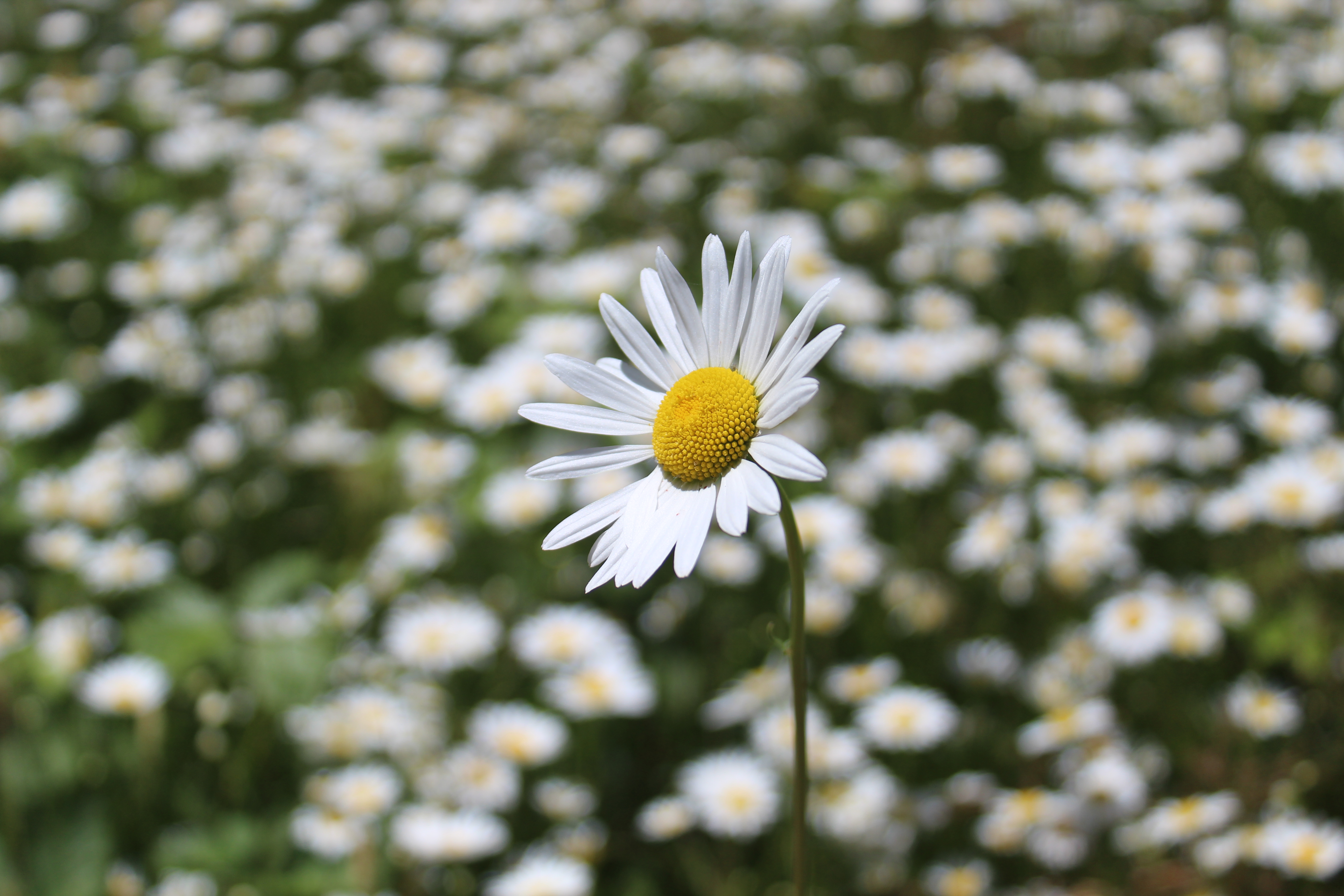
Shasta daisies always bring to mind Spring, 1989, and the kindness of strangers. I was four years old at the time, the same age my daughter is now. I was one of a dozen other mini ballerinas parading across the stage at Crescent Elk Auditorium for our annual dance recital. It was the same stage I would awkwardly walk across a decade later during my eighth-grade graduation. Even more awkward having sipped from a small bottle of Peppermint Schnapps beforehand. (I sure was a special student. At-risk, I think they called it.) That was the first and last certificate of anything I would ever get in my hometown.

The day of the recital my four-year-old brain got tripped up after having walked out onto the stage, looked out to the audience, and noticed my Great Grandma Gladys sitting there. I froze. Usually my Great Grandma Gladys was in her manufactured home by the sea. In her dusty pink recliner. With my “Barrel of Monkeys”–a toy she kept just for me–on her TV stand. Usually she was at home, in her nightgown, smelling like Vix VapoRub and beef minestrone. But on the day of my ballet recital, she was right there in the audience, sitting with my Grandma Peggy, Great Aunt Tina and, of course, Dad. I almost couldn’t believe it, until she raised her hand to wave, palm facing me, wiggling four fingers and smiling. I was transfixed. My face turned pinker than our ballet shoes, and I stood firmly in place for the rest of our number, shyly waving back at Great Grandma Gladys while the other ballerinas did their grand plies and jetes all around me. I didn’t even move when the music stopped. Eventually an older ballerina, dressed head-to-toe in black, picked me up and whisked me backstage. I know because we have a video recording of the whole thing.

At the end of the recital (this is where the Shasta daisies come in) all the ballerinas from the entire recital went out on stage to take our final bow. The leads got big flower bouquets and rounds of enthusiastic applause. The younger mini ballerinas all got single red roses. And then there was me, the last mini ballerina and no more red roses to go around. Surely it was because I’d goofed up on my part, not even dancing like we’d been practicing for. But before anyone could boo or throw something or–even worse–collect their jackets and leave, a nameless, faceless stranger handed me a single white Shasta daisy on a sturdy green stem. They must have run outside and picked it.

The Shasta daisy set me apart, just as I had set myself apart earlier, as a stage frightened little girl. Not all of us are meant for the spotlight, or even for destined for the things that everyday people take for granted–a mother to look after you, graduations, trophies and certificates, a bedroom to yourself, red roses…That day in the auditorium was the first of many more humbling moments to come. But looking back, it reminds me that no matter how difficult the circumstances are, there is always an angel in the wings. The Shasta daisy is a reminder that I am both special and not special all at once.

Dad and I after my ballet recital. A single Shasta daisy in my hand. Spring, 1989.

If I Took My Grief Out to Lunch

Dear Reader, Throughout the month of October I, along with a small group of other writers, wrote about loss in “Write Your Grief Out” with Anne and Maria Gudger. Here is one excerpt from that period, based on the prompt “If you took your grief out to lunch, what would you talk about?”

If I took my grief out to lunch, we’d talk about the way things used to be. How the other day I saw a small child sending crab pots off the dock into the ocean with her father. The way we used to do that before you became a vegetarian. Before you quit crabbing in the wintertime and raising rabbits for meat in our backyard. We’d talk about way before the tofu and carob phase, when you ate burgers and drank Budweiser. But that was never you, so I was glad I got to see your next phase too: your altars and spiritual books and how a real live guru came to visit us and stayed in our home and went on long walks with you in the woods.

If I took my grief out to lunch, we’d talk about the way things used to be. How half the pictures from when you were a boy show you at the top of some tree. Or expertly showing your hog for 4-H. Or snug in the middle of three sisters, volleying between tormenting them and being the soft shoulder they could cry on. How you had so much lived life before me, but it took you dying for me to really see that. The boy you’d been–wild as they come. The teenager you’d been–different, but popular and carefree. The man you’d become–a young, single father, your biggest challenge yet.

If I took my grief out to lunch, we’d go up river afterward. We’d blast Johnny Cash through the redwoods, roll down the windows, and stop for a drink of spring water gushing from Carter Falls. I’d take my grief inside the culvert under South Fork Road, where the runoff pours into the river in wintertime. We’d steady ourselves on the rocks, crouching just to watch the water run. Solely for the meditative purpose of it. We’d have no agenda. We’d have no to-do’s. We’d see a bald eagle and raise our hands to our chest in prayer. We’d skip rocks. We’d drive up further and park by Rock Creek. We’d travel up creek on bare feet. We might see a wild animal drinking from the stream; or a fairy ring of mushrooms, undisrupted. We’d awe.

If I took my grief out to lunch, we’d talk about the way things used to be. The time we rode elevators to the tops of the tallest buildings in San Francisco, just to look out the windows. Danced with other Hare Krishna devotees at Golden Gate Park, real ones who lived in the temples year round, not just for a few weeks in the summertime like we did. Venice Beach. Berkeley. Vancouver B.C. All the food and the flowers and the strangers. How we’d come back to Crescent City in September tanned, hair windblown and faces happy, just the two of us. No mom in sight and all the freer for it.

If I took my grief out to lunch we’d talk about the way things used to be–because it’s the best balm to the way things are now. Less colorful. Less natural. Less free. I don’t know many daughters who can claim that the best gift their parents gave them was freedom and exploration–just for the sake of it. Without agenda. But if I took my grief out to lunch, we’d talk about that.

With love,

Mama Bird

Mantra for the Sane

d4af6fd6ce769b680853a4444175f873.jpg

In writing I worry
I have said too much,
too little
I capitalize on
the funny parts
the sick parts
the sad parts
the parts
half worth
anything
to anyone
(likely not)
I leave out how
my Dad religiously
kissed my forehead every
morning before school
or that friends
parents often
said “we can’t afford
to keep  feeding her”
which only made
my hungrier
my cousins
called me
“oinker”
I leave out
the parts where
I was a happy, jolly
normal kid playing
make-believe and house
I leave out the parts where
I do not go hungry
But I remember
the good times
when I do the dishes,
the innocent times
when I sweep the floor,
the carefree times
when I call for the dog,
“I wanted this”
I recall
“This is all I ever
wanted”
I write my past
I plot my future
“I’ll be the husband
and you’ll be the wife”
I remember saying
“I’ll go to the store now
to get the groceries”
It will be so much fun
It is all I ever wanted
It will be so much fun
I recall, hand swirling
in a vat of dishwater,
igniting the suds
It will be so much fun
to be grown
It is all I ever wanted

This becomes a mantra
for the sane

It will be so much fun
to be grown
It is all I ever wanted
I’ll go to the store now
to get the groceries
It will be so much fun

A History of Kitchens Part One

rebecca sittler
Photography credit: Rebecca Sittler

These are the kitchens of my past. Some of the kitchens were females and some were males. Some of them had dining tables and some did not. I remember the worst of the kitchens, the friends or neighbor’s kitchens in college—I was afraid to eat a thing strait from the waterlogged counter, there were hotpink Las Vegas shot glasses and sticky empty liquor bottles on their sides and who knows whose ass had been sitting up there. I remember the food bank finds, the cardboard microbrew beerbottle canisters with a banana inside, a serrated knife, and a days old spoon with yogurt-tongue markings still on it…a bag of Western Family wheat bread always almost out and wanting so badly to be the lucky roommate to eat the last sandwich, with cheese.

I cleaned kitchens in exchange for cigarettes for a woman I can’t remember the name of now but I can see her plain as day in front of a sepia television, blinds closed, sitting on her long black hair on a tan couch in a house down Modoc Lane. I was fourteen. She didn’t have a table in her kitchen. I used yellow Sun soap and an inefficient wide-pored plastic green scrubby from the dollarstore to wash dried Top Ramen noodles from indian boybowls on foggy, windy days, my kid-hands enjoying the hot soapy water and subsequent Marlboro 100’s plus four to go in the pocket of my jean jacket.

Personal | Becky Luigart-Stayner--Food & Lifestyle Photographer
Photography credit: Becky Luigart-Stayner

Kitchens with no power. A solar pushlamp dim as a candle. Kerosene lanterns and a generic plastic red and white checkered tablecloth my Dad picked up at Shop Smart. My Dad, just twenty-four but playing Mom with our square, aluminum-legged kitchen table, checkered cloth and candlelight, for both practical and spiritual purposes. Two dinner plates and forks. Papertowels folded in half for napkins. The days when things were real good for us both. A father, a daughter, and a kitchen. Propane gas stove and long-handled lighters—big boxes of matches my Dad would strike on his pants zipper if I asked him to. Matches that struck on the pavement of the platform outside our trailer, the concrete foundation that would be our home. A home that never really got to happen.

It was a small father-daughter kitchen, with one window above the sink which in the daytime looked out to a lush green lot, with rabbits in cages, wild doves in the Myrtlewood trees, and geese and ducks and things. The window fogged at night and I would write things on it to entertain myself, smiling faces, peace signs, my name, mad, antsy scribbles, spirals and hearts. There were no refrigerator magnets and the walls were bare. In the living room was a framed school photo of me that would eventually burn and in the bathroom, the Lord’s Prayer hanging on the wall, a wooden vintage piece: Our father who art in Heaven, Hallowed be Thy Name... In the kitchen cupboards: white sheaths of premium saltine crackers, cans of “ABC” soup, a bag of popcorn kernals, white rice, apricot jam, and on the counter, carrots, potatoes, cumin and mint tea.

What Katie Ate » Happy Easter 2013 (!) and a few Gluten-Free Desserts :)
credit unknown

A boy cousin is over for dinner. We’d come by some sort of green squeaky toy—a frog—my dad requests that we bow our heads to pray before eating which I obediently do. My boy cousin squeaks the toy and giggles. Maybe he did this twice. My Dad says firmly (to us both, as to not even call my cousin out), “Humble yourselves.” My boy cousin squeaks the toy again and my Dad immediately smacks the toy from my boycousins hand, looking serious for once and shocking us both to the core as it was one of the few times we’d seen my Dad genuinely pissed. We both bowed our heads as my Dad gave a shaky, but always sincere prayer starting with Dear Heavenly Father and ending with the three of us saying Amen.

Nag champa incense and me knee-sitting on a simple wooden chair washing dishes, often my designated chore, with large yellow rubber gloves (you know the kind) complete the memory of my most cherished kitchen—the one dad and I shared in Rock Creek. Sometimes I would be asked to come play, but my Dad made me do dishes instead. However if the dishes got done, I could go play. But if they didn’t it was me in the kitchen crying and alone.

This is The End

I started running out of things to write. I’ve told you about all the wild things, my wildcard parents, my over-bearing, artistic grandmother, my messy scramble for love, our dirty homes and apartments, all the mistakes we ALL made, and will continue to make…I told you and then I came to the end. I started running out of things to write.

Spring came–and with its newness and promise, I was able to recognize the closing of the first part of my life; my first twenty-eight years. Nothing spectacular happened, nothing dramatic, but it was a slow ease into my twenty-eight spring. And that stillness was something different, something new, there’s maybe even something dramatic about the way the waters calmed and stilled and pooled after years of gushing and cascading.

All the parts have closed in on themselves. The wild things have closed their wings. I think, finally, I am done. I am done telling this story. I was wondering when it was going to end, and how. People always ask me “Is your book finished yet? How do you even end a memoir, cause, like your life is still happening.” Exactly I always say, How do you?

At this stage of my manuscript it looks like this: I should maybe not even call it a manuscript but a project. Projects get messy, this is messy. This is not 303 typed crisp white pages binded and clipped with a title page and dedications. I do not know the title yet and I have a ton of typing to do!!! See, I am a writer, not a typer. I am a writer, not an editor! My project looks like this: something like twenty-four notebooks complied over the past six years filled with long, drawn out and angry dialogue during which I am both teaching myself to write and scribbling all the letters I never did, but apparently really wanted to write to my mother, lovers, and other people too. Oh I let them have it. I didn’t only say nice things about my father either. Didn’t only say nice things about anyone I wrote about except maybe Charles.

So its Spring now and I’m twenty-eight (and a half) and I’m standing out in my boyfriends lawn and he’s just mowed the grass, the air is perfect, the trees are like magic, and I’m not even high on anything. I look at the sky and it’s perfect too. There’s a wiry black dog running around at my feet. My feet are bare, I’m wearing nothing but a long white cotton halterdress with orange blooms, my hair is down and long now, my body is weightless as I realize that the moment is perfect, just me, in the woods, no book even, no coffee, no shoes, a man off in the distance, the promise of sex and comfort, my bareface, my dreams, the lightness I feel in. this. moment.

I notice something over my shoulder. I slowly turn and look, I see The End. I see the chaos that was my past, my history, tromping off like a brigade heading to who knows where, not any longer attached to me, but parting from me. I bid goodbye. I holler and smile. I prepare to let go.

Esther

Did I dream her up?
I met her in the vegetable garden. It was sometime near my fifth birthday. I was fingering the dense pumpkin stocks and their broad leaves like wall insulation to the touch–misleadingly soft and cozy. Like a five year old herself.
She appeared there beyond the ripe orange globes.
She stared at me,  reached out to touch the vines.
She was my age. Her eyes spoke to me but her childmouth never moved. I admired her wetsand-colored curls as she told me that we were Identical. That he touched her too. That he came for her when he was done with me, that he came for me when he was done with her. She told me her name was Esther. Before I could respond, he pulled up in his Chevrolet. I crouched down in the path in my Autumn dress. I peeked my eyes above the garden greens as he pointed to the passenger door instructing her to get in. My eyes got big and wet, her dress was caught in the door, they drove down the dirt lane toward Hunter Creek and I shook but it wasn’t cold outside.

Cabin Door

When the cabin door was pulled shut at night I could let out my big breath. I always felt ill at ease when my Dad’s buddies were around and they were always around. Didn’t work. None of ‘em. I wished they would go home to their trailers down the road. And they would for a minute and they would come back and they would invite me and I would say no, talking quietly back to their hot smelly beer breath.

In the day I would go hide by the river and pretend all those things little girls pretend. That they are princesses, mermaids, that they are safe. But when the sun went down Dad said I had to be home at the cabin.

The door of the cabin didn’t lock, exactly. In fact the door handle was a rope with a big fat knot. We had one of those little tiny silver hook locks on the inside of the door and nobody could break that unless they were really, really trying too. No one was out to get us, by any means, but there were a lot of men with wild eyes up there you see. Outlaws. I felt better and safer when the cabin door was shut and my Dad’s friends were locked out for the night.

I wished I had a sister or a brother, big ones, or a mom.

Nostalgic

Permitting my
mind to wander
like a small child
in a meadow
back before the
tablets and
animated games
when one would
examine the grasses
and discover its
many kinds–
Rattlesnake grass,
Kentucky Bluegrass,
the type with edible
lavender or buttercup
flowers
Nature was as close
to a child as the chest
of a mother and nature
was enough for the
eighties child
Allowing my
mind to wander
like water
around the bend
around the tangible
spaces of this life
reaching and touching,
smelling and lifting
avoiding the flashing
and faux